
20 Beginner-Friendly Platforms That Give You a Single-Pane Business View
Running a business means juggling customer data, sales numbers, project timelines, and a dozen other moving parts. For newcomers to business management software, the idea of bringing everything together in one place can feel overwhelming. The good news is that many platforms now offer a single-pane view that shows you everything important without requiring a computer science degree to understand. This list focuses on tools that are approachable for first-time users, with straightforward interfaces and gentle learning curves. You’ll find options that help you get started quickly without drowning in complicated features you don’t need yet.
- Legiit

Legiit provides a simple dashboard where service providers and agencies can manage their entire freelance or service business from one screen. You can track client projects, handle payments, communicate with buyers, and monitor your service listings without switching between multiple tools. The platform was built with freelancers and small agencies in mind, so the interface avoids unnecessary complexity. If you’re new to managing a service business online, Legiit offers an approachable way to keep everything organized in one place without overwhelming you with enterprise features you won’t use.
- Monday.com
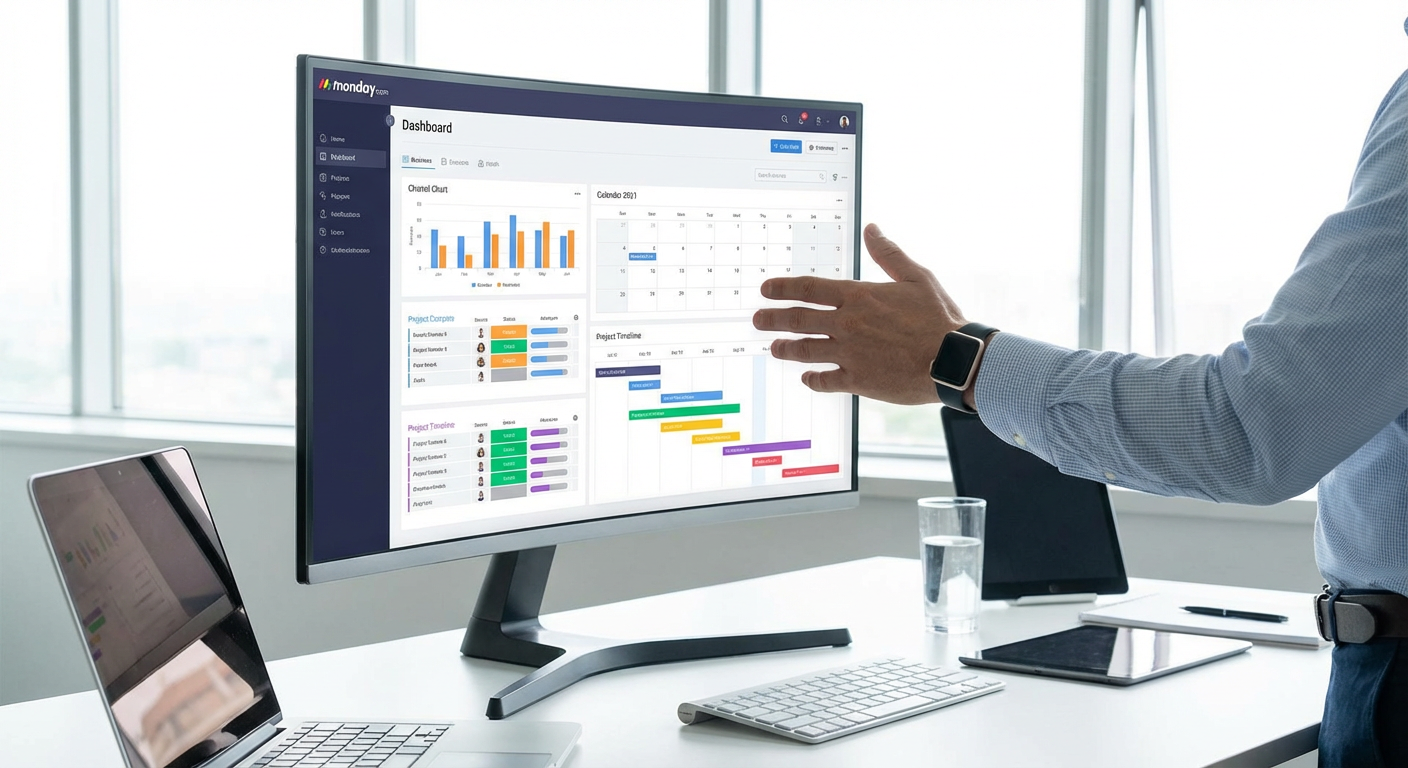
Monday.com uses colorful boards and simple drag-and-drop functions that make sense even if you’ve never used project management software before. The visual layout shows you tasks, deadlines, and team responsibilities at a glance. You can start with basic boards and gradually add features as you get comfortable. The platform includes helpful templates for common business needs, so you don’t have to build everything from scratch. Many beginners appreciate that it looks friendly rather than intimidating.
- Zoho One
Zoho One bundles more than forty business apps into a single subscription, but you don’t have to use them all at once. Start with the basics like CRM and email, then add accounting or project management when you’re ready. Everything connects through one login and shares data automatically. The dashboard gives you a bird’s-eye view of sales, customer interactions, and financial health. For beginners, this means you can grow into the platform without switching systems later.
- Trello
Trello’s card-based system is one of the easiest ways to visualize your business tasks and projects. Each card represents a task, and you move cards across columns as work progresses. The simplicity makes it perfect for people who find traditional project management tools confusing. You can see your entire workflow on one screen without any training. While it’s basic compared to some options, that’s exactly why beginners love it.
- Airtable
Airtable looks like a spreadsheet but acts like a database, giving you flexibility without the steep learning curve of traditional database software. You can track customers, inventory, projects, and more in linked tables that update automatically. The interface feels familiar if you’ve ever used Excel or Google Sheets. Views let you see your data as a grid, calendar, or gallery depending on what makes sense. Many first-time users find it easier to understand than purpose-built business software.
- HubSpot CRM
HubSpot offers a free CRM that newcomers can actually understand and use without reading a manual. The dashboard shows your sales pipeline, recent customer interactions, and upcoming tasks in a clean layout. Adding contacts and logging activities takes just a few clicks. Email tracking and basic reporting come built in, so you get useful insights without complicated setup. The free tier is generous enough that many small businesses never need to upgrade.
- Notion
Notion combines notes, databases, and project tracking in one flexible workspace that you can customize to fit your business. The learning curve is gentle because you start with blank pages and add complexity only when needed. Templates help beginners set up common business views like client trackers or content calendars. You can link different pages together to create a connected system that shows relationships between projects, clients, and tasks. The interface feels more like a document editor than business software, which many newcomers find less intimidating.
- Pipedrive
Pipedrive focuses specifically on sales pipeline management with a visual interface that’s easy to grasp in minutes. You see all your deals arranged by stage, and moving them forward is as simple as dragging and dropping. The dashboard highlights what needs your attention today without burying you in data. Setup wizards walk you through the initial configuration, asking plain-language questions instead of technical jargon. For someone new to CRM software, Pipedrive removes most of the confusion.
- ClickUp
ClickUp offers powerful features but packages them in an interface that beginners can navigate with some patience. The home screen summarizes your tasks, projects, and goals in customizable widgets. You can start simple with basic task lists and gradually enable more advanced features like time tracking or automation. The platform includes extensive tutorials and templates specifically designed for newcomers. While there’s more to learn than with simpler tools, the payoff is a system that can grow with your business.
- Streak
Streak lives inside Gmail, turning your inbox into a CRM without requiring you to learn a separate platform. Your customer interactions are already in email, and Streak adds pipeline tracking and task management right there. The single-pane view shows deals, support tickets, or projects alongside your regular email. For beginners who find standalone business software overwhelming, working inside a familiar email interface reduces the learning curve significantly. Setup takes minutes, and the basic features are straightforward.
- Basecamp
Basecamp deliberately keeps things simple with a flat structure that shows projects, messages, schedules, and files without nested menus or complicated hierarchies. The home screen displays everything that needs your attention across all projects. You won’t find endless configuration options, which is actually helpful when you’re just starting out. The tool does a few things well rather than trying to do everything. Many beginners appreciate that Basecamp doesn’t require decisions about workflows or custom fields.
- Asana
Asana presents your tasks and projects in multiple views including lists, boards, and timelines, letting you choose what makes sense to you. The onboarding process includes interactive tutorials that teach you the basics by doing rather than reading. The home dashboard shows upcoming deadlines, recently assigned tasks, and projects you’re involved in. Color coding and progress bars provide visual cues that help you understand status at a glance. While Asana has depth, the surface-level experience remains approachable for newcomers.
- Freshworks CRM
Freshworks CRM (formerly Freshsales) provides a clean dashboard that prioritizes clarity over feature density. You see your sales pipeline, today’s tasks, and key metrics without scrolling through multiple tabs. The setup wizard asks simple questions and builds your initial configuration automatically. Built-in phone and email tools mean you don’t need to integrate external services right away. For first-time CRM users, the straightforward approach removes many common stumbling blocks.
- Capsule CRM
Capsule CRM strips away complexity to focus on the essentials: contacts, sales opportunities, and tasks. The dashboard gives you a clear view of your sales pipeline and what needs doing today. Adding new contacts or deals requires just a few form fields rather than pages of options. The interface uses plain language and avoids technical terms. Small businesses and solo entrepreneurs often choose Capsule specifically because it doesn’t try to do too much.
- Smartsheet
Smartsheet takes the familiar spreadsheet format and adds project management features, making it easier for beginners to transition from Excel or Google Sheets. You can see tasks, timelines, and resources in a grid view that feels comfortable. Adding features like Gantt charts or card views happens with simple toggles. The dashboard summarizes key metrics and project health across all your sheets. For people who already think in rows and columns, Smartsheet requires less mental adjustment than completely new interfaces.
- Copper
Copper integrates deeply with Google Workspace, so if you already use Gmail and Google Calendar, much of your business data appears automatically. The relationship-focused interface shows you context about customers without manual data entry. The dashboard highlights deals that need attention and tasks coming due. For beginners already comfortable with Google’s ecosystem, Copper feels like a natural extension rather than a foreign system. Setup involves connecting your Google account and letting Copper pull in existing information.
- Wrike
Wrike provides multiple ways to view your work, including simple lists for beginners and more complex views as you advance. The home dashboard shows assigned tasks, project updates, and upcoming deadlines in a clean layout. Customization happens gradually through templates and presets rather than forcing configuration decisions upfront. The platform includes interactive guides that appear when you try new features. While Wrike has enterprise capabilities, the entry-level experience remains accessible.
- Insightly
Insightly combines CRM and project management in one platform with a focus on simplicity. The dashboard shows your sales pipeline alongside project milestones, giving you business context in one view. Drag-and-drop functionality makes it easy to move deals through stages or reorganize tasks. Setup wizards walk you through importing contacts and creating your first projects. The interface avoids overwhelming you with too many options while still providing room to grow.
- Bitrix24
Bitrix24 offers a free tier that includes CRM, tasks, and communication tools with a unified dashboard showing activity across all areas. The setup process uses wizards and templates to get you started quickly. While the platform has many features, you can ignore advanced options and focus on basics like contact management and task lists. The all-in-one approach means beginners don’t need to connect multiple services. The interface has improved significantly to be more approachable for first-time users.
- Teamwork
Teamwork balances capability with usability through a dashboard that shows projects, tasks, and time tracking without clutter. The platform includes beginner-friendly templates for common business scenarios like client projects or product launches. Visual progress indicators help you understand project status at a glance. The setup process includes helpful explanations rather than assuming you know project management terminology. Many agencies and service businesses choose Teamwork because it’s powerful enough to grow with them but simple enough to start quickly.
Getting a complete view of your business doesn’t require mastering complicated enterprise software or spending weeks on training. The platforms in this list were chosen specifically because they respect your time and don’t assume you’re already an expert. Start with one that matches your immediate needs, whether that’s tracking sales, managing projects, or organizing customer relationships. As you get comfortable, you can explore more features or add connected tools. The key is choosing a platform that makes sense to you right now, not one that promises everything but delivers confusion. Your business view should clarify your work, not complicate it.