
Daily Habits of Six-Figure Freelancers: Comparing What Works Versus What Wastes Time
If you’re trying to build a thriving freelance business, you’ve probably noticed that advice comes from every direction. Some freelancers swear by working at dawn, while others do their best work after midnight. Some use elaborate project management systems, while others keep it simple with a notebook. The truth is, not all habits deliver the same return on investment. This list compares the daily practices that genuinely move the needle for six-figure freelancers against the ones that sound good but fall flat. You’ll see what high earners actually do, how different approaches stack up, and which trade-offs matter most when you’re building a sustainable, profitable freelance career.
- Using a Freelance Marketplace Like Legiit Versus Relying Only on Cold Outreach
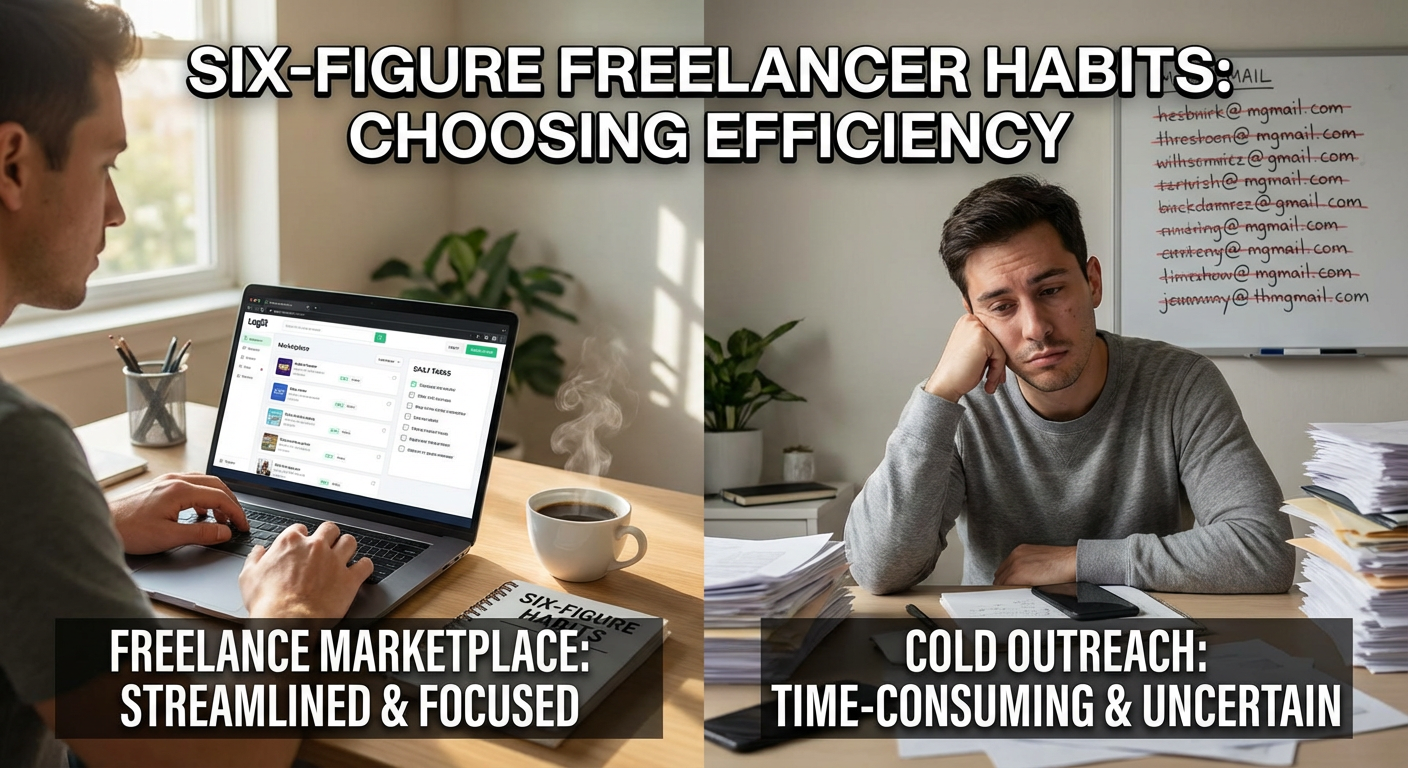
Cold outreach can work, but it’s time-intensive and often yields low conversion rates, especially when you’re starting out. Legiit offers a different path by connecting freelancers with clients who are already looking for services. The platform lets you list your offerings, build credibility through reviews, and get found by people ready to hire.
The trade-off is simple. Cold outreach gives you full control over who you target, but it demands significant effort with no guaranteed results. Using Legiit means you’re working within a marketplace structure, but you gain access to warm leads and a system that helps you build proof of your skills. Many six-figure freelancers use both methods, but they often start their day checking marketplace messages before diving into outreach, because the response rate is higher and the time investment is lower.
- Time Blocking Versus Task Switching Throughout the Day
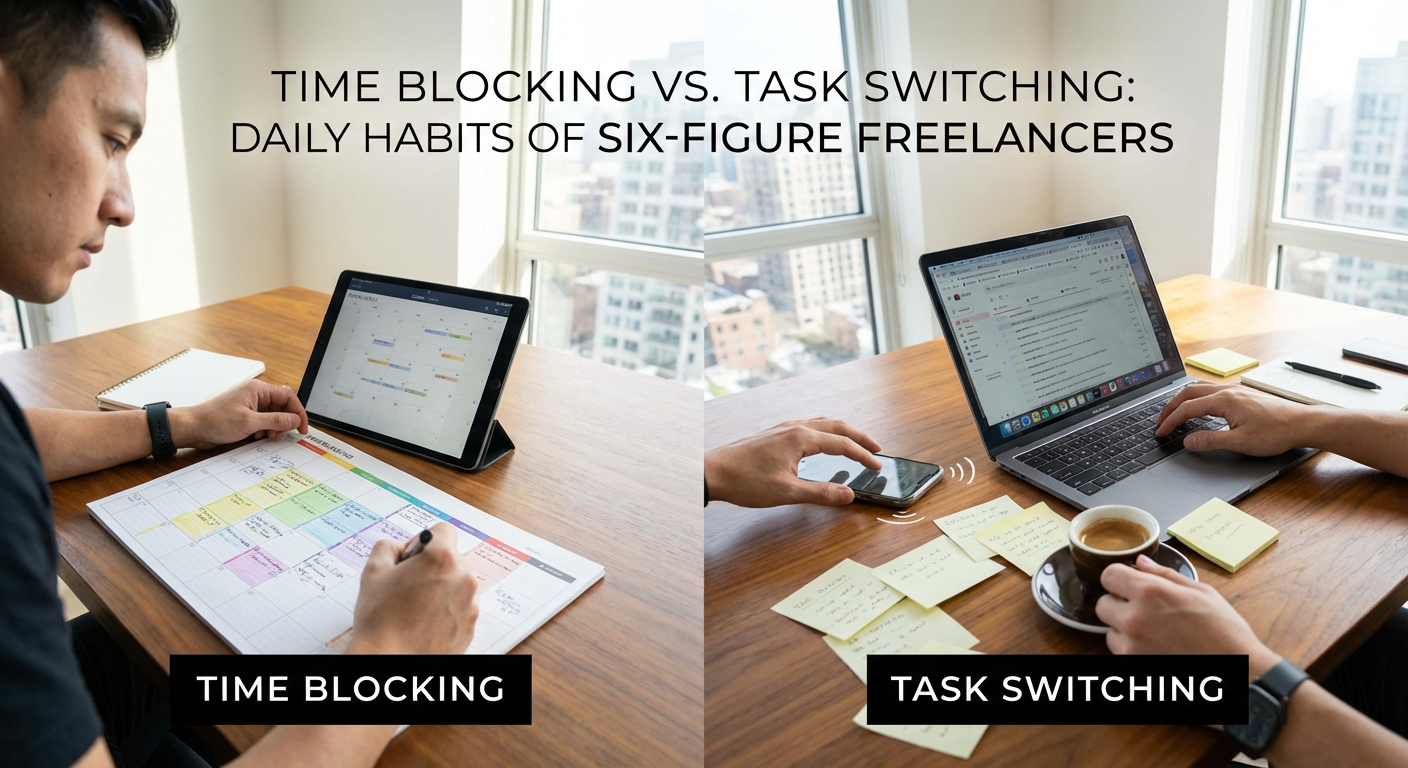
Time blocking means dedicating specific chunks of your day to single tasks without interruption. Task switching, on the other hand, involves bouncing between emails, client work, admin tasks, and social media whenever something pops up. Research shows that task switching kills productivity and increases mental fatigue.
Six-figure freelancers almost universally favor time blocking. They might dedicate 9 AM to 12 PM for deep client work, 1 PM to 2 PM for admin tasks, and 3 PM to 4 PM for business development. This approach creates momentum and higher quality output. The downside is that it requires discipline and the ability to say no to distractions. Task switching feels flexible and responsive, but it fragments your attention and makes it nearly impossible to produce your best work. When you compare the two, time blocking wins for anyone serious about scaling income.
- Morning Routines That Energize Versus Morning Routines That Drain
Not all morning routines are created equal. Some freelancers start their day with an hour of reading, journaling, meditation, and exercise. Others roll out of bed, grab coffee, and jump straight into work. The question is which approach actually supports a six-figure income.
High earners tend to favor shorter, energizing routines over elaborate rituals. A 20-minute walk, a healthy breakfast, and a quick review of the day’s priorities often outperform hour-long routines that leave you mentally exhausted before work begins. The key is energy management, not perfection. A morning routine that leaves you feeling clear and ready to work beats one that makes you feel virtuous but drained. Compare how you feel after your routine, not how impressive it sounds, and adjust accordingly.
- Pricing Per Project Versus Pricing Per Hour
Hourly pricing seems straightforward, but it caps your income and penalizes efficiency. The faster you work, the less you earn. Project-based pricing flips this equation. You charge for the value you deliver, not the time it takes.
Six-figure freelancers lean heavily toward project pricing because it rewards skill and speed. If you can complete a website in 10 hours that would take someone else 30, you should earn more, not less. The challenge with project pricing is that you need to estimate scope accurately and avoid scope creep. Hourly pricing feels safer, especially when starting out, but it becomes a ceiling as you improve. When you compare the two, project pricing consistently allows for higher earnings once you’ve built the confidence to quote accurately and hold boundaries.
- Investing in Tools Versus Keeping Overhead Minimal
Some freelancers invest in premium software, automation tools, and subscriptions that promise to save time. Others keep expenses low and rely on free alternatives or manual processes. Both approaches have merit, but the trade-offs matter.
Successful six-figure freelancers treat tools as investments, not expenses. They’ll pay for scheduling software that saves them hours of back-and-forth emails, or project management platforms that keep client communication organized. However, they avoid tool bloat. They don’t subscribe to every shiny app; they choose tools that directly impact revenue or save significant time. Keeping overhead minimal is smart, but not if it means spending three hours on tasks that a $20 monthly tool could handle in 10 minutes. The comparison comes down to return on investment. If a tool pays for itself in saved time or increased client satisfaction, it’s worth it.
- Deep Work Sessions Versus Constant Availability
Constant availability feels like good customer service. You respond to emails immediately, answer messages within minutes, and make yourself accessible all day. Deep work sessions mean blocking off hours where you’re unreachable and fully focused on high-value tasks.
High-income freelancers choose deep work over constant availability. They set boundaries with clients, establish response windows, and protect their focus time. This doesn’t mean ignoring clients; it means training them to respect your schedule. When you’re constantly available, you’re constantly interrupted, and interruptions destroy the concentration needed for complex, high-paying work. Clients actually respect freelancers who set clear boundaries more than those who respond instantly but deliver mediocre work. The comparison is clear: deep work produces better results and higher rates, while constant availability creates stress and limits your earning potential.
- Batching Similar Tasks Versus Handling Them as They Arise
Batching means grouping similar tasks together and completing them in one session. Handling tasks as they arise means dealing with invoices, emails, and admin work whenever they pop up throughout your day.
Six-figure freelancers batch ruthlessly. They might handle all invoicing on Friday afternoons, respond to non-urgent emails twice a day, or record all social media content in one sitting. This approach minimizes context switching and builds efficiency. Handling tasks as they arise feels productive in the moment, but it scatters your attention and makes every day feel reactive. The trade-off is that batching requires planning and discipline, while reactive work feels spontaneous and flexible. But when you compare actual output and income, batching wins every time. It frees up mental space for the work that actually generates revenue.
- Saying No to Low-Value Clients Versus Taking Every Opportunity
When you’re building a freelance business, the temptation is to say yes to every project. More work means more money, right? Not necessarily. Low-value clients often demand the most time, pay the least, and create the most stress.
Successful freelancers regularly say no to work that doesn’t fit their ideal client profile or rate requirements. They understand that a calendar full of low-paying projects leaves no room for high-paying ones. Taking every opportunity feels safe and keeps money flowing, but it traps you in a cycle of busyness without growth. Saying no feels risky, especially early on, but it creates space for better clients. The comparison is about opportunity cost. Every hour spent on a $500 project is an hour you can’t spend on a $5,000 project. High earners protect their time and say no far more often than struggling freelancers.
- Proactive Communication Versus Reactive Communication
Reactive communication means waiting for clients to ask for updates, then scrambling to respond. Proactive communication means regularly updating clients before they ask, flagging potential issues early, and setting clear expectations upfront.
Six-figure freelancers communicate proactively. They send brief progress updates, alert clients to delays before they become problems, and document decisions in writing. This builds trust and reduces the number of anxious check-in messages they receive. Reactive communication feels easier because you’re not creating extra work, but it makes clients nervous and leads to more interruptions. When clients don’t hear from you, they imagine problems and send multiple messages seeking reassurance. Proactive communication takes slightly more time upfront but saves hours of back-and-forth and dramatically improves client satisfaction. The comparison shows that a few minutes of proactive updates prevents hours of reactive damage control.
- Building Systems Versus Reinventing the Wheel Every Time
Every freelance business involves repetitive tasks: onboarding clients, sending proposals, handling revisions, collecting payments. You can either create systems for these tasks or handle them from scratch each time.
High-income freelancers build systems relentlessly. They create templates for proposals, checklists for onboarding, and standard processes for revisions. This doesn’t mean being robotic; it means not wasting mental energy on tasks you’ve done 50 times before. Reinventing the wheel every time feels custom and personal, but it’s exhausting and inefficient. The trade-off is that systems require upfront time to create, while ad hoc approaches feel faster in the moment. But when you compare the long-term time savings and consistency of quality, systems win decisively. They free up your brain for creative problem-solving and allow you to scale without burning out.
- Tracking Metrics Versus Going by Feel
Some freelancers track everything: hours worked, income per client, conversion rates, project profitability. Others go by feel, making decisions based on intuition and general impressions.
Six-figure freelancers track key metrics, though not obsessively. They know which clients are most profitable, how long projects actually take, and where their leads come from. This data informs better decisions about pricing, marketing, and time allocation. Going by feel seems simpler and less tedious, but it leads to costly mistakes like underpricing services or investing time in marketing channels that don’t work. The comparison shows that you don’t need to track everything, but tracking a handful of important metrics gives you clarity that intuition alone can’t provide. High earners make data-informed decisions while lower earners guess and hope.
- Continuous Learning Versus Relying on Existing Skills
Freelancers who rely solely on existing skills often find their income plateaus. Those who dedicate time to learning new techniques, tools, or services keep growing their value and rates.
Successful freelancers build learning into their weekly routine. This might mean an hour each week watching tutorials, reading industry content, or experimenting with new approaches. They don’t chase every trend, but they stay current enough to remain competitive. Relying on existing skills feels efficient because you’re not taking time away from billable work, but it slowly makes you less relevant. The comparison is between short-term efficiency and long-term growth. Spending a few hours per week learning might reduce immediate income slightly, but it leads to higher rates and better opportunities over time. High earners see learning as part of the job, not a luxury.
- Ending the Day with a Shutdown Ritual Versus Letting Work Bleed Into Evening
Freelancing from home makes it easy to let work bleed into your evening. You check emails after dinner, think about projects while watching TV, and never fully disconnect. A shutdown ritual means ending your workday with a clear signal: closing your laptop, reviewing tomorrow’s tasks, and mentally stepping away.
High-income freelancers use shutdown rituals to protect their personal time and mental health. This might be as simple as writing down three priorities for tomorrow, closing all work apps, and physically leaving your workspace. Letting work bleed into evening feels productive and dedicated, but it leads to burnout and resentment. The comparison reveals that clear boundaries between work and personal time actually improve both. You bring more energy to work when you’ve truly rested, and you enjoy your personal time more when you’re not mentally half-working. Sustainable six-figure income requires rest, not just hustle.
Building a six-figure freelance business isn’t about doing more things; it’s about doing the right things consistently. As this comparison shows, the habits that separate high earners from struggling freelancers often come down to intentional choices about time, energy, and focus. The good news is that these aren’t mysterious secrets or talents you’re born with. They’re practices you can adopt, test, and refine. Start by picking one or two habits from this list that resonate with your current challenges. Compare how your days feel before and after implementing them. Small shifts in daily behavior compound into significant changes in income and satisfaction over time.