Blog

12 Beginner-Friendly Places to Find Newsletter & Email Copy Specialists

12 Beginner-Friendly Places to Find Newsletter & Email Copy Specialists

If you’re new to hiring freelance writers or looking for your first email copywriter, the process can feel overwhelming. Where do you start? What platforms are easiest to use? How do you know you’re getting quality work? This guide focuses on beginner-friendly platforms and resources where you can find talented newsletter and email copy specialists without needing a degree in hiring or a complicated vetting process. These options prioritize simple interfaces, clear pricing, and accessible communication so you can get started quickly and confidently.

  1. LegiitLegiit

    Legiit offers one of the most straightforward experiences for beginners hiring email copywriters. The platform uses a marketplace model where writers list their services with fixed prices, so you know exactly what you’ll pay before you commit. You can browse through detailed service descriptions, see real reviews from other clients, and compare options without any guesswork.

    What makes Legiit particularly helpful for first-timers is the transparency. Writers showcase their portfolios, response times, and delivery schedules right on their profile pages. You don’t need to negotiate rates or manage complicated contracts. Simply find a service that matches your needs, place an order, and communicate directly with your writer through the platform’s messaging system. The learning curve is minimal, which means you can focus on your project instead of figuring out how the platform works.

  2. FiverrFiverr

    Fiverr built its reputation on being accessible to everyone, including people who have never hired a freelancer before. The platform organizes services into clear categories, and you can filter results by budget, delivery time, and seller rating. Email copywriters on Fiverr typically offer packages at different price points, making it easy to find something that fits your budget.

    The review system is robust and helps you make informed decisions. Each gig shows completion rates, response times, and detailed feedback from previous buyers. For beginners, this transparency removes much of the anxiety around hiring someone you’ve never worked with before. The interface is simple enough that most people can place their first order within minutes of signing up.

  3. Upwork

    Upwork gives you two ways to find email copy specialists, both of which work well for beginners. You can browse freelancer profiles and invite people to your project, or you can post a job and let writers come to you. For first-time hirers, posting a job is often the easier route because you’ll receive proposals with pricing and timelines, allowing you to compare multiple options.

    The platform includes built-in tools for contracts, time tracking, and payments, which means you don’t need to figure out separate systems for each part of the hiring process. Upwork also offers payment protection, so your money is held securely until you approve the work. This safety net provides peace of mind when you’re still learning how to evaluate freelance work.

  4. Contently

    Contently takes a managed approach that works particularly well for beginners who want guidance. Rather than browsing thousands of profiles on your own, you work with Contently’s team to define your needs, and they match you with suitable email copywriters from their vetted network. This concierge-style service removes the burden of screening and vetting candidates yourself.

    The platform handles much of the administrative work, including contracts and payments, so you can focus on providing feedback and refining your content. While Contently tends to serve mid-sized to larger projects, the hand-holding approach makes it accessible even if you’re new to content marketing. You’ll pay more for this service level, but the reduced complexity can be worth it when you’re just starting out.

  5. LinkedIn

    LinkedIn might not seem like an obvious choice, but it’s actually one of the most beginner-friendly places to find email copywriters. Most writers maintain detailed profiles showing their experience, samples, and recommendations from colleagues and clients. You can search by job title, review their work history, and reach out directly through the platform’s messaging system.

    What makes LinkedIn particularly approachable is that you’re connecting with real professionals in a transparent environment. You can see mutual connections, verify employment history, and get a sense of someone’s personality through their posts and activity. The platform doesn’t charge fees for connecting with freelancers, though the writers themselves will quote their own rates. For beginners who prefer direct relationships without platform intermediaries, LinkedIn offers a comfortable starting point.

  6. Facebook Groups for Copywriters

    Facebook hosts dozens of active groups where email copywriters share their availability and connect with potential clients. Groups like Cult of Copy Job Board and Email Copywriting for E-commerce bring together writers and business owners in a casual, community-focused environment. For beginners, these groups offer a low-pressure way to ask questions, read about other people’s hiring experiences, and find writers through personal recommendations.

    The informal nature of Facebook groups means you can have real conversations before committing to work with someone. You’ll see how writers interact with the community, get referrals from other group members, and often find people willing to work on smaller starter projects. Just be prepared to handle contracts and payments independently, as Facebook doesn’t provide built-in tools for freelance transactions.

  7. Reedsy

    Reedsy originally focused on book publishing but has expanded to include email marketing and newsletter specialists. The platform vets all its freelancers before allowing them to create profiles, which means you’re choosing from a pre-screened pool of professionals. This quality control is particularly valuable for beginners who aren’t yet confident in their ability to evaluate portfolios and credentials.

    The interface is clean and simple. You post a brief describing your project, and interested writers send you proposals. You can review their profiles, see samples of their work, and read reviews from previous clients, all in one place. Reedsy doesn’t charge clients any fees, which makes budgeting straightforward. The platform works best for newsletter and content-focused email projects rather than aggressive sales copy.

  8. ProBlogger Job Board

    ProBlogger has been connecting writers with clients for years through its straightforward job board. You post your project with details about what you need, your budget, and your timeline, and writers apply directly via email. The process is simple and doesn’t require learning a new platform or navigating complicated features.

    For beginners, this simplicity is the main advantage. You’ll receive applications directly in your inbox, complete with relevant samples and rate information. You handle all communication, contracts, and payment arrangements yourself, which gives you complete control but also means you need to be comfortable managing these details. The job board attracts experienced professionals who are often willing to work with first-time clients, and posting a listing costs a modest one-time fee.

  9. Twitter (X)

    Many email copywriters actively promote their services on Twitter and use the platform to share tips, samples, and availability. By searching hashtags like #emailcopywriter, #copywritersforhire, or #newsletterwriter, you can find professionals who are currently accepting clients. Twitter’s public nature means you can review someone’s expertise by reading their threads and posts before reaching out.

    For beginners, Twitter offers a chance to see how writers think and communicate before hiring them. You can gauge their knowledge, check out their personality, and get a sense of whether they’d be a good fit for your brand. Direct messages make initial contact easy, and many writers include links to their portfolios or booking pages in their profiles. The informal atmosphere can feel less intimidating than formal freelance platforms.

  10. Copywriter Collective

    Copywriter Collective maintains a directory of professional copywriters, including specialists in email and newsletter content. The site lets you filter by specialty, industry experience, and location, making it easy to narrow down your options. Each writer has a profile page with their background, services, and contact information.

    The simplicity of this directory approach works well for beginners. You’re not navigating a complex marketplace or trying to understand platform-specific features. Instead, you browse profiles like you would look through a catalog, reach out to writers who seem like good matches, and handle the rest of the process directly. The site includes helpful articles about working with copywriters, which can answer common questions you might have as a first-time client.

  11. Local Marketing and Business Associations

    Your local chamber of commerce, business networking groups, or marketing associations often include copywriters among their members. These organizations host regular meetings and maintain member directories, giving you a chance to meet writers in person or connect through local channels. For beginners, the local angle can feel more comfortable than hiring someone across the country or overseas.

    Meeting face-to-face or having a phone conversation before committing to a project helps build trust, especially when you’re new to the hiring process. Local professionals may also better understand your regional market and audience. While you might have fewer options than on large national platforms, the personal connection and geographic proximity can make the entire experience feel more manageable. Many local associations host their directories online, so you can browse members even if you can’t attend in-person events.

  12. Referrals from Other Business Owners

    Sometimes the best way to find a reliable email copywriter is simply to ask other business owners who they work with. Referrals from people you trust come with built-in credibility, and you can ask detailed questions about what it’s like to work with a particular writer. This approach is especially beginner-friendly because you’re getting guidance from someone who has already been through the process.

    Reach out to colleagues in your industry, post in business forums you’re part of, or ask in local entrepreneurship groups. People are usually happy to share recommendations when they’ve had good experiences. You’ll often get honest feedback about communication styles, turnaround times, and pricing that you wouldn’t find in a public review. While this method requires some networking effort, the quality of matches tends to be high because the referrals come from real working relationships.

Finding your first email copywriter doesn’t have to be complicated or stressful. The platforms and resources on this list prioritize accessibility, clear communication, and straightforward processes that work well for beginners. Start with one or two options that feel most comfortable to you, and don’t be afraid to try a small test project before committing to larger work. Most writers understand that first-time clients need a bit more guidance and are happy to answer questions along the way. With these beginner-friendly options at your fingertips, you’re well-equipped to find a talented newsletter or email copy specialist who can help your business grow.


19 Expert-Recommended Places to Outsource Long-Form Content That Actually Ranks

19 Expert-Recommended Places to Outsource Long-Form Content That Actually Ranks

Finding writers who can create long-form content that performs well in search results is harder than it looks. Many platforms promise great results, but the quality varies wildly. Industry experts and seasoned content managers have tested dozens of services, and the winners share common traits: they vet their writers carefully, understand SEO fundamentals, and deliver work that reads naturally while hitting search intent. This list compiles the most trusted platforms where professionals consistently find writers who produce content that ranks. Whether you’re managing content for a startup or an established brand, these services have earned their reputations through proven results.

  1. LegiitLegiit

    Content strategists frequently recommend Legiit for businesses that want reliable SEO-focused writers without the overhead of traditional agencies. The platform specializes in digital marketing services, and its content writers understand the technical side of ranking content. You can review detailed seller profiles, past work samples, and verified reviews before hiring.

    What sets this service apart is the focus on deliverables that work. Writers on the platform often have backgrounds in specific niches, which means they can write with authority on complex topics. The pricing is transparent, and you can build long-term relationships with individual writers once you find someone who matches your needs.

  2. ContentlyContently

    Marketing directors at major brands trust Contently for high-stakes content projects. The platform maintains a strict vetting process for its freelance network, accepting only experienced writers with professional portfolios. Each writer goes through skills assessments and editorial reviews before joining.

    The platform works best for teams that need consistent quality across multiple pieces. You get access to project management tools, editorial oversight, and analytics that track how your content performs. The trade-off is cost, as Contently positions itself at the premium end of the market.

  3. Scripted

    Content managers appreciate Scripted for its industry-specific writer pools. The service categorizes writers by expertise, so you can hire someone who already understands your field. This saves time on briefing and reduces the back-and-forth that comes with generic writers.

    The platform includes built-in SEO tools that help writers optimize as they write. You can request revisions within a set timeframe, and the quality control process catches obvious errors before delivery. Pricing is structured around word count and writer experience level, making budgeting straightforward.

  4. ClearVoice

    Agencies and in-house teams use ClearVoice when they need writers who can handle complex, research-heavy topics. The platform screens writers for expertise and maintains detailed profiles that showcase subject matter knowledge. You can see writing samples, credentials, and ratings from previous clients.

    The service includes workflow management features that help coordinate multiple writers and projects. Editors are available to review content before it reaches you, which adds a layer of quality assurance. The pricing varies based on writer experience and project scope, but the focus is on quality over volume.

  5. WriterAccess

    SEO specialists often point to WriterAccess for its large pool of vetted freelancers and flexible pricing. The platform uses a star rating system to classify writers by skill level, making it easy to match your budget with the appropriate expertise. You can order individual pieces or set up ongoing content calendars.

    The service includes AI-powered matching tools that suggest writers based on your topic and requirements. Writers receive SEO guidelines with each assignment, and the platform provides performance metrics so you can track which writers deliver results. The subscription model offers discounts for higher volume orders.

  6. Compose.ly

    Content directors value Compose.ly for its managed service approach. Instead of browsing writer profiles yourself, you work with a dedicated account manager who matches you with appropriate writers. This removes the guesswork and speeds up the hiring process.

    The platform handles all communication with writers, manages revisions, and ensures deadlines are met. Writers go through a multi-step vetting process that includes writing tests and editorial reviews. The service works well for teams that want outsourced content without the administrative burden of managing freelancers directly.

  7. Verblio

    Small business owners and mid-sized marketing teams appreciate Verblio for its streamlined ordering process. You submit a content request with your keywords and requirements, and multiple writers can pitch on your project. You only pay for the submissions you accept, which reduces risk.

    The platform maintains a community of freelance writers who specialize in various industries. Each piece goes through a quality check before reaching you, and the pricing is based on word count and turnaround time. The self-service model makes it accessible for teams without dedicated content managers.

  8. Crowd Content

    E-commerce brands and affiliate marketers frequently use Crowd Content for product descriptions, buying guides, and review content. The platform has writers who understand commercial intent and how to write content that converts while still ranking.

    You can choose between submitting open orders that any qualified writer can claim, or working directly with specific writers you’ve used before. The service includes basic SEO optimization as standard, and editors review each piece for quality. Pricing is competitive, and bulk ordering provides additional savings.

  9. Textbroker

    Budget-conscious teams appreciate Textbroker for its tiered pricing structure. Writers are rated on a star system, and you can order from different quality levels depending on your needs. The platform has been around for years and maintains a large writer network.

    The service works best when you have clear briefs and don’t need extensive subject matter expertise. You can request specific writers for ongoing projects once you find reliable contributors. The ordering process is straightforward, and turnaround times are generally quick for standard assignments.

  10. ContentWriters

    Marketing managers trust ContentWriters for its balance of quality and affordability. The platform pre-vets all writers and assigns each project to someone with relevant experience. You receive a dedicated account manager who helps refine your content strategy.

    The service includes unlimited revisions within reason, which helps ensure you get what you need. Writers receive detailed style guides and SEO instructions with each order. The pricing is transparent and based on word count and expertise level, with volume discounts available for regular clients.

  11. Upwork Pro

    Experienced content strategists use the Pro tier of Upwork when they need vetted talent without sorting through hundreds of applicants. The service pre-screens freelancers and provides dedicated account support. You get access to writers who have proven track records and verified credentials.

    The platform handles contracts, payments, and time tracking if needed. You can build long-term relationships with individual writers and negotiate rates that fit your budget. The quality of writers in the Pro tier is generally higher than the standard marketplace, though you pay a premium for the curation.

  12. Skyword

    Enterprise content teams rely on Skyword for large-scale content operations. The platform provides strategy support, writer networks, and publication tools all in one system. Writers go through extensive vetting, and the platform matches you with creators who have proven expertise in your industry.

    The service includes analytics and performance tracking to measure how your content ranks and engages readers. Account managers help refine your content approach based on results. The investment is substantial, but brands that need consistent, high-volume content find value in the full-service model.

  13. ContentFly

    Growing businesses appreciate ContentFly for its subscription model and consistent delivery. You sign up for a monthly plan that includes a set number of articles, and the service assigns writers who match your niche. The platform handles all writer management and quality control.

    Each piece goes through editing before delivery, and you can request revisions if needed. The service works well for companies that need regular blog content without hiring full-time staff. Pricing is based on article quantity and length, making it predictable for budgeting purposes.

  14. Express Writers

    SEO agencies and consultants frequently recommend Express Writers for clients who need fast turnaround without sacrificing quality. The service maintains a team of in-house and contracted writers who can handle rush orders. Each writer has experience with SEO best practices and keyword integration.

    The platform offers various content types beyond standard blog posts, including long-form guides and pillar content. You work directly with the team to outline requirements, and they handle writer assignment and project management. Pricing reflects the speed and quality, positioning this service in the mid to premium range.

  15. Godot Media

    Content directors who need strategic support alongside writing services turn to Godot Media. The agency provides both the writers and the content planning, helping you build comprehensive content strategies that target valuable keywords. Writers are matched to your industry and have demonstrated expertise.

    The service includes keyword research, content calendars, and performance reporting. You get a managed experience where the team handles hiring, quality control, and optimization recommendations. The cost is higher than self-service platforms, but the strategic guidance helps ensure your content investment pays off.

  16. Constant Content

    Publishers and content buyers use Constant Content for its marketplace of pre-written and custom articles. You can browse completed pieces or commission new content from specific writers. The platform vets all contributors and maintains quality standards through editorial review.

    The service works well when you need content quickly or want to preview work before committing. Writers set their own prices, so you can find options across various budget ranges. The marketplace model provides flexibility, though finding the right writer may take some browsing.

  17. Wordgigs

    Small teams and solopreneurs appreciate Wordgigs for its straightforward approach. The platform connects you with experienced freelance writers without complex onboarding or high minimum orders. You can hire writers for one-off projects or ongoing work.

    The service focuses on quality over quantity, maintaining a smaller network of thoroughly vetted writers. Each writer has subject matter expertise, and you can review portfolios before making a decision. Pricing is negotiated directly with writers, which provides flexibility but requires more involvement than fully managed services.

  18. ContentGrow

    Marketing teams in fast-growing companies use ContentGrow for its network of niche specialists. The platform focuses on matching you with writers who have real expertise in specific industries, from SaaS to healthcare. This specialization helps produce content that demonstrates authority and ranks for competitive terms.

    The service includes project management tools and quality assurance processes. You can work with the same writers repeatedly once you find good matches. Pricing varies based on writer experience and topic complexity, but the focus on expertise means you typically pay more than generic content mills.

  19. Hire an Editor

    Content strategists looking for senior-level writers often use Hire an Editor, despite the name. The platform maintains a network of experienced editors and writers who can handle complex, long-form content that requires research and nuance. The vetting process is selective, accepting only proven professionals.

    The service works well for thought leadership pieces, comprehensive guides, and content that needs to establish credibility. Writers typically have years of experience and often come from journalism or publishing backgrounds. The rates reflect the expertise, making this option best suited for high-value content projects where quality directly impacts results.

The platforms on this list have earned recommendations from content professionals because they consistently deliver work that performs. Some offer full-service management, while others give you direct access to writers. Your best choice depends on your budget, how much involvement you want in the process, and the level of expertise your topics require. The common thread across all these services is a focus on quality and results rather than just cheap words. Start with one or two platforms that match your needs, test them with smaller projects, and build relationships with writers who understand your goals. Good content takes investment, but finding the right outsourcing partner makes that investment pay off in rankings and traffic.

15 Future-Ready Platforms for SEO Content Briefs, Writing, and Optimization

15 Future-Ready Platforms for SEO Content Briefs, Writing, and Optimization

The content marketing landscape shifts constantly, and the tools you choose today will shape your results tomorrow. If you’re building a content strategy that needs to stand the test of time, you need platforms that adapt to algorithm changes, support evolving workflows, and integrate with emerging technologies. This list focuses on platforms that aren’t just solving today’s problems but are positioned to grow with your needs. Whether you’re a content strategist, marketing director, or agency owner, these tools offer the flexibility and forward thinking you need to stay competitive.

  1. LegiitLegiit

    Legiit stands out as a marketplace connecting businesses with vetted SEO and content professionals who understand modern optimization requirements. Rather than locking you into a single software solution, this platform gives you access to human expertise that adapts as search algorithms and content standards change. You can find specialists for content briefs, writers who grasp current SEO principles, and editors who optimize for both readers and search engines.

    The real value here is flexibility. As your content needs shift or new content formats gain traction, you’re not stuck with a rigid tool. Instead, you can tap into professionals who stay current with industry changes. This human-centered approach offers a different kind of future proofing, one based on adaptability rather than automation alone.

  2. ClearscopeClearscope

    Clearscope focuses on content optimization through data-driven insights that help writers match search intent. The platform analyzes top-ranking content for your target keywords and provides recommendations on topics, terms, and structure. What makes it forward thinking is its emphasis on relevance and comprehensiveness rather than outdated keyword density tactics.

    The interface is clean and writer friendly, which means your team can adopt it without extensive training. As Google continues to prioritize content that truly answers user questions, tools like Clearscope that emphasize depth and context will remain relevant. It integrates with common content management systems and documents, making it easy to fit into existing workflows.

  3. Frase

    Frase combines content research, brief creation, and optimization into one platform. It uses AI to analyze search results and generate outlines based on what’s currently ranking. You can create detailed content briefs that guide writers toward comprehensive coverage of a topic.

    The platform also includes an optimization editor that scores your content as you write, helping you stay aligned with search intent. Frase continues to add features that respond to changes in how people search and how search engines evaluate content. Its focus on question-based content and natural language makes it well suited for voice search and conversational queries, which are becoming more common.

  4. Surfer SEO

    Surfer SEO provides detailed on-page optimization guidance by analyzing hundreds of ranking factors across top search results. The platform offers a content editor that gives real-time feedback on word count, keyword usage, headings, and more. It’s designed to help you match the patterns that search engines reward.

    Surfer’s approach is data heavy but presented in a way that’s actionable for writers and editors. The platform regularly updates its algorithms to reflect changes in search engine behavior, which means your optimization strategy stays current. It also includes features for creating content briefs, making it useful for both planning and execution phases.

  5. MarketMuse

    MarketMuse uses AI to audit your existing content and identify gaps in your coverage. It helps you understand not just what to write, but what’s missing from your content library. The platform builds topic models that show how comprehensively you’re covering subjects compared to competitors.

    This strategic view makes MarketMuse valuable for content teams that want to build authority over time. Rather than chasing individual keywords, you can develop clusters of related content that establish expertise. As search engines get better at understanding topic relationships and entity connections, this approach becomes more important. The platform is particularly useful for larger content operations with multiple writers and ongoing publication schedules.

  6. Jasper AI

    Jasper AI is an AI writing assistant that can generate content drafts, headlines, and variations quickly. While AI writing tools are still maturing, Jasper has positioned itself as a platform that focuses on quality and context. You can train it with your brand voice and style guidelines, which helps maintain consistency across content.

    The platform works best when you use it as a starting point rather than a final product. It can help you overcome blank page syndrome and generate ideas when you’re stuck. As natural language processing improves, tools like Jasper will likely become more capable of producing nuanced, accurate content. For now, it’s most valuable for high-volume content needs where human editors refine the output.

  7. SEMrush Writing Assistant

    SEMrush Writing Assistant integrates directly into Google Docs and WordPress, providing SEO recommendations as you write. It checks your content for readability, tone, originality, and keyword optimization. The tool pulls data from SEMrush’s broader SEO platform, which gives you insights grounded in actual search data.

    What makes this tool forward looking is its emphasis on readability and user experience alongside traditional SEO metrics. Search engines increasingly reward content that people actually want to read, not just content stuffed with keywords. The plagiarism checker also helps you avoid duplicate content issues, which remain important as search engines crack down on low-quality material.

  8. ContentShake

    ContentShake focuses on helping smaller teams and solo creators build content strategies without needing deep SEO expertise. The platform suggests topics based on your niche, competition level, and search volume. It then helps you outline and write content with built-in optimization guidance.

    This kind of accessible, all-in-one approach serves the growing number of businesses that can’t afford dedicated SEO specialists but still need to compete in search. As content creation becomes more democratized, platforms that simplify complex processes without dumbing them down will find their audience. ContentShake’s focus on education and guidance rather than just automation makes it a good fit for teams that want to learn as they work.

  9. Grammarly Business

    Grammarly Business goes beyond basic spell checking to offer style suggestions, tone adjustments, and clarity improvements. While not strictly an SEO tool, it plays a crucial role in content quality. Search engines increasingly use engagement signals to evaluate content, and clear, well-written material keeps readers on the page longer.

    The platform also helps maintain consistency across team members, which is important as content teams grow. You can set style guides and preferences that Grammarly enforces automatically. As voice and video content grow, the ability to write clearly and conversationally becomes even more valuable. Grammarly’s focus on communication quality positions it well for a future where content appears in many formats.

  10. Writer

    Writer is a content platform designed for teams that need to maintain brand voice and style across many contributors. It uses AI to check content against your specific guidelines, flag inconsistencies, and suggest improvements. You can create custom style guides that cover everything from terminology to tone.

    This becomes increasingly important as content operations scale. Consistent voice builds brand recognition and trust, which indirectly supports SEO through better user engagement. Writer also includes features for content collaboration and approval workflows, making it useful for organizations with complex review processes. As brands publish more content across more channels, tools that maintain coherence become essential.

  11. Ahrefs Content Explorer

    Ahrefs Content Explorer helps you research what content is performing well in your niche. You can search by topic or keyword and see metrics like backlinks, social shares, and organic traffic. This research capability helps you create content briefs based on what’s actually working, not just what you think might work.

    The platform shows you content gaps where competitors are ranking but you aren’t, which helps prioritize your content calendar. As content marketing becomes more competitive, this kind of intelligence becomes critical. Ahrefs regularly updates its index and adds features that respond to changes in how content spreads and gains visibility. The insights you gain here inform strategy, not just individual pieces.

  12. Outranking

    Outranking combines content planning, writing, and optimization in a workflow-focused platform. It helps you move from keyword research to published content with guided steps at each stage. The platform uses AI to analyze search intent and suggest content structures that match what searchers want.

    Outranking also includes features for tracking content performance after publication, which closes the loop on your content process. You can see what’s working and refine your approach based on real results. This continuous improvement mindset is essential as search algorithms change and user behavior shifts. The platform’s focus on intent and context rather than just keywords positions it well for future search developments.

  13. Copy.ai

    Copy.ai offers AI-powered copywriting for everything from blog posts to social media captions. Like other AI writing tools, it’s best used as a creative assistant rather than a replacement for human writers. You can generate multiple variations of headlines, introductions, and calls to action quickly.

    The platform continues to expand its templates and improve its output quality as language models advance. For content teams that need to produce high volumes of material, AI assistance can speed up the drafting process significantly. The key is maintaining editorial oversight to ensure accuracy and brand alignment. As AI writing technology matures, early adopters who learn to use it effectively will have a production advantage.

  14. Textmetrics

    Textmetrics focuses on optimizing content for both search engines and readability. The platform analyzes your text and provides suggestions to improve clarity, reduce jargon, and match your target audience’s reading level. It also checks for SEO basics like keyword usage and content structure.

    This dual focus on human readers and search algorithms reflects where content optimization is heading. Search engines want to rank content that serves users well, which means readability and clarity matter more than ever. Textmetrics helps you avoid the trap of writing for robots instead of people. The platform supports multiple languages, making it useful for international content operations.

  15. INK Editor

    INK Editor combines AI writing assistance with real-time SEO optimization. The platform helps you draft content while checking it against ranking factors and readability standards. It includes features for generating content briefs, outlining articles, and optimizing final drafts.

    INK emphasizes protecting content creators from AI detection, which is becoming more important as search engines and readers grow wary of low-quality automated content. The platform positions itself as a tool that enhances human creativity rather than replacing it. As the line between AI-assisted and AI-generated content becomes a topic of concern, tools that help humans write better will maintain their value.

Choosing platforms that will serve you well into the future means looking beyond flashy features to consider adaptability, integration capabilities, and alignment with how search and content are changing. The tools on this list represent different approaches to the same goal: creating content that ranks well and serves readers effectively. Some emphasize data and optimization, others focus on workflow and collaboration, and still others bring AI assistance into the mix. The best choice for your situation depends on your team size, content volume, and strategic priorities. Start with one or two platforms that address your biggest current challenges, then build out your toolkit as your needs grow. The content landscape will keep changing, but with the right tools, you can change with it.

10 Freelance Management Tools Compared: Which Ones Actually Deliver?

10 Freelance Management Tools Compared: Which Ones Actually Deliver?

Managing a freelancing business means juggling clients, projects, invoices, and deadlines all at once. The right tools can make the difference between smooth operations and constant chaos. But with so many options available, how do you know which ones are worth your time and money? This list compares ten essential management tools for freelancers, weighing their strengths against their weaknesses so you can make informed decisions. Whether you’re looking for client management, project tracking, or financial organization, you’ll find practical comparisons that help you choose what actually works for your business.

  1. Legiit: The All-in-One Freelance Platform Compared to Scattered SolutionsLegiit: The All-in-One Freelance Platform Compared to Scattered Solutions

    Legiit offers freelancers a complete business management system in one place, from client acquisition to project delivery and payment processing. Unlike piecing together separate tools for finding work, managing projects, and getting paid, Legiit handles everything on a single platform. This integration saves you from subscription fatigue and the hassle of syncing data across multiple apps.

    The main advantage is simplicity. You can list your services, communicate with clients, track projects, and receive payments without switching between tools. The downside is that you’re locked into their ecosystem, which works well if you like their approach but less so if you prefer customizing every aspect of your workflow. For freelancers who want to spend less time on admin and more time working, Legiit provides a straightforward alternative to managing five different subscriptions.

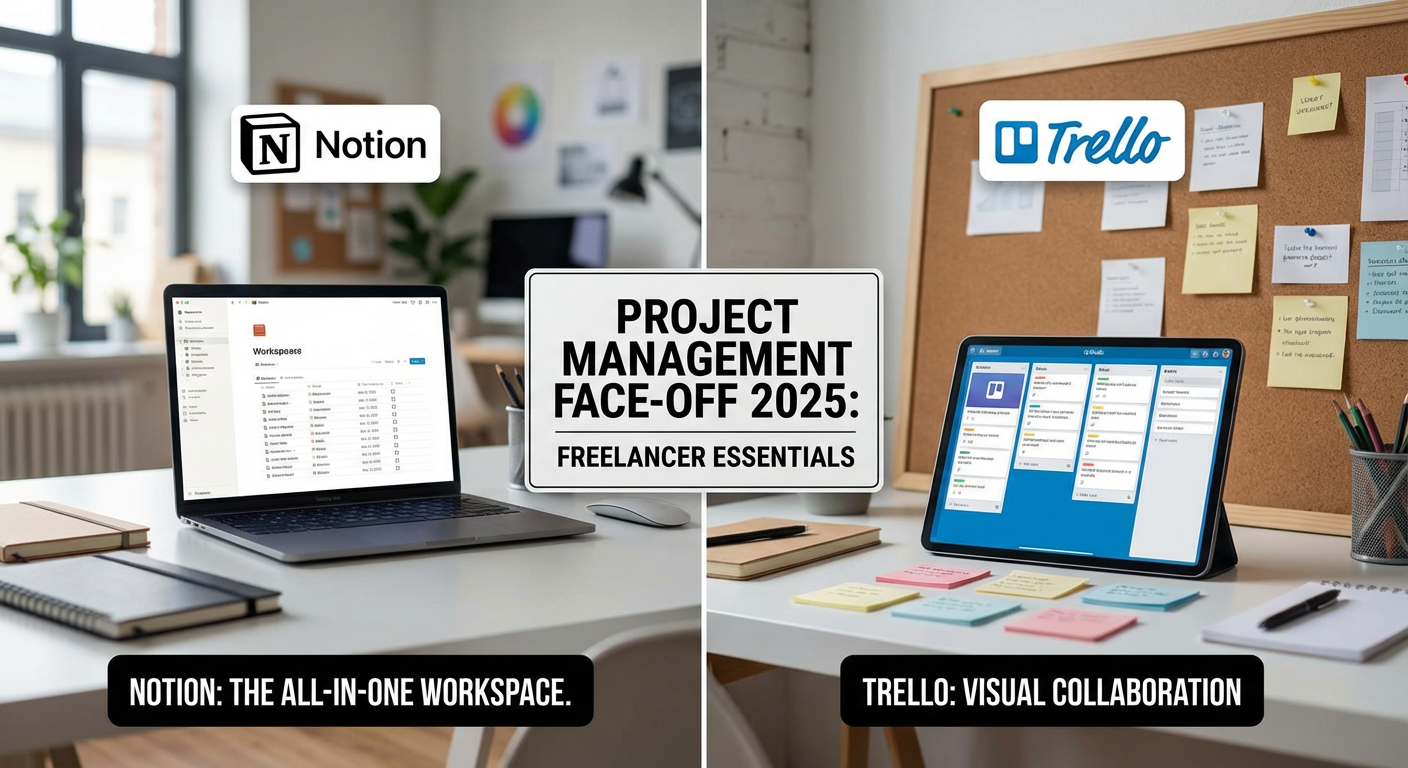
  2. Notion vs. Trello: Visual Project Management Face-OffNotion vs. Trello: Visual Project Management Face-Off

    Notion and Trello both help you organize projects, but they take different approaches. Trello uses a simple card-based system with boards, lists, and cards that anyone can understand in minutes. It’s visual, intuitive, and perfect for managing straightforward projects with clear stages. The limitation is that it can feel restrictive when you need more complex databases or detailed documentation.

    Notion offers far more flexibility with databases, wikis, and customizable templates. You can build elaborate project management systems tailored exactly to your needs. However, this power comes with a learning curve. Setting up Notion the way you want takes time, and some freelancers find it overwhelming. Choose Trello if you want quick setup and visual simplicity. Pick Notion if you’re willing to invest time upfront for a highly personalized system that grows with your business.

  3. QuickBooks vs. FreshBooks: Accounting Software for Different Priorities

    QuickBooks is the heavyweight champion of small business accounting, offering comprehensive features that handle everything from invoicing to tax preparation. It’s powerful and widely recognized by accountants, which makes tax season easier. The trade-off is complexity. QuickBooks has a steeper learning curve and can feel overwhelming if you just need basic invoicing and expense tracking.

    FreshBooks was built specifically for freelancers and service providers. Its interface is cleaner and more approachable, with excellent time tracking and client communication features. Invoices look professional and are easy to customize. The downside is that it offers fewer advanced accounting features, which might matter as your business grows. If you want depth and plan to scale significantly, QuickBooks makes sense. If you prioritize ease of use and client-facing features, FreshBooks wins.

  4. Calendly vs. Acuity Scheduling: Appointment Booking Tools Reviewed

    Both Calendly and Acuity Scheduling eliminate the back-and-forth emails when booking client meetings, but they serve slightly different needs. Calendly is simpler and faster to set up. You define your availability, share a link, and clients book times that work for both of you. It integrates smoothly with major calendar apps and video conferencing tools. The limitation is customization. Advanced features like intake forms and multiple payment options require higher-tier plans.

    Acuity Scheduling offers more control from the start. You can collect detailed information through intake forms, accept payments at booking, and set up complex scheduling rules for different service types. This makes it better for freelancers who offer multiple services or need to collect information before meetings. The downside is that it costs more and takes longer to configure. For basic meeting scheduling, Calendly is faster and cheaper. For service-based bookings that require payments or detailed forms, Acuity provides better functionality.

  5. Toggl Track vs. Harvest: Time Tracking with Different Strengths

    Accurate time tracking is essential for billing clients fairly and understanding where your hours go. Toggl Track excels at the actual tracking part. Its interface is clean, starting and stopping timers is effortless, and the reporting gives you clear insights into your productivity. It’s also affordable, with a generous free tier. The weakness is invoicing. While Toggl offers basic invoicing features, they feel like an afterthought compared to dedicated invoicing tools.

    Harvest combines solid time tracking with robust invoicing capabilities. You can track time, generate professional invoices directly from those hours, and even accept online payments. This integration means fewer tools in your stack. However, Harvest costs more and its time tracking interface isn’t quite as polished as Toggl’s. If you need excellent time tracking and handle invoicing elsewhere, Toggl Track is hard to beat. If you want time tracking and invoicing in one place without compromise, Harvest delivers better integration.

  6. Slack vs. Microsoft Teams: Client Communication Platforms Compared

    Staying in touch with clients and collaborators requires reliable messaging tools. Slack pioneered the modern workplace chat app and remains popular for its clean interface and extensive app integrations. Channels keep conversations organized, search works well, and most clients already know how to use it. The drawback is cost. Once you exceed the message limit on the free plan, prices climb quickly, especially if you’re managing multiple client workspaces.

    Microsoft Teams comes bundled with Microsoft 365 subscriptions, making it essentially free if you already use Office apps. It includes video calls, file storage, and deep integration with Word, Excel, and other Microsoft tools. The interface feels busier and less intuitive than Slack, which can frustrate some users. For freelancers embedded in the Microsoft ecosystem or working with corporate clients who use Teams, it’s the practical choice. For everyone else, Slack offers a better user experience if you can justify the cost.

  7. Asana vs. Monday.com: Full-Featured Project Management Compared

    When you manage complex projects with multiple moving parts, basic task lists aren’t enough. Asana provides detailed project tracking with tasks, subtasks, dependencies, and timeline views. It’s particularly strong for managing workflows and ensuring nothing falls through the cracks. The interface takes time to master, and some freelancers find it offers more structure than they need for solo work.

    Monday.com takes a more visual, colorful approach with customizable boards that adapt to different workflows. It’s easier to create views that match exactly how you think about your work, whether that’s timelines, kanban boards, or calendars. The flexibility is both a strength and weakness. You can build almost anything, but figuring out the best setup requires experimentation. Asana works better for straightforward project management with established workflows. Monday.com shines when you need visual customization and want your tool to adapt to your unique process rather than the other way around.

  8. Google Workspace vs. Microsoft 365: Cloud Productivity Suites Reviewed

    Every freelancer needs basic productivity tools like documents, spreadsheets, and cloud storage. Google Workspace (formerly G Suite) offers Docs, Sheets, Gmail, and Drive in a package that’s lightweight and collaboration-friendly. Everything lives in the browser, real-time collaboration works smoothly, and the interface is straightforward. The limitation is feature depth. Google’s apps lack some advanced capabilities that power users need in Word or Excel.

    Microsoft 365 provides the full desktop versions of Office apps plus cloud storage and business email. If you need advanced formatting, complex spreadsheet functions, or work with clients who send Office files, compatibility is better. The apps feel more professional but also heavier and sometimes slower. Google Workspace costs less and works better for simple collaboration. Microsoft 365 costs more but delivers greater power and compatibility with traditional business environments. Your choice depends on whether you value simplicity or advanced features.

  9. LastPass vs. 1Password: Password Management Tools Face-Off

    Managing dozens of client logins and service passwords without a password manager is both insecure and frustrating. LastPass offers a free tier that covers basic password storage and autofill on unlimited devices. The interface is functional, and it works across all major browsers and platforms. Recent security incidents have raised concerns, and the free tier has become more limited over time.

    1Password takes security seriously with a strong track record and features like travel mode that temporarily hides sensitive vaults. The interface is more polished, and features like Watchtower alert you to compromised passwords. There’s no free tier, so you’ll pay from day one. For freelancers handling sensitive client information, the extra security features and peace of mind justify the cost. If budget is tight and you need basic password management, LastPass works. For better security and user experience, 1Password is worth the investment.

  10. Dropbox vs. Google Drive: Cloud Storage for Freelancers Compared

    Reliable file storage and sharing are non-negotiable for freelancers. Dropbox pioneered cloud storage and still offers the smoothest desktop integration. Files sync quickly, selective sync lets you control what’s stored locally, and sharing is intuitive. The Smart Sync feature is particularly useful for managing storage on smaller drives. The downside is cost. Dropbox provides less free storage and charges more per gigabyte than competitors.

    Google Drive gives you more free storage and integrates perfectly with Google Docs, Sheets, and other Workspace apps. For freelancers already using Google’s productivity suite, it’s the natural choice. File sharing works well, though the desktop sync client isn’t quite as polished as Dropbox’s. If you work primarily in Google’s ecosystem and want generous storage at a lower price, Google Drive makes sense. If you need the best sync performance and work with large files across multiple devices, Dropbox’s premium experience justifies the higher cost.

Choosing the right management tools for your freelancing business isn’t about finding the single best option. It’s about understanding the trade-offs and picking tools that match your priorities, budget, and working style. Some tools offer simplicity at the cost of features, while others provide power but require time to master. The comparisons above give you a realistic picture of what each tool does well and where it falls short. Start with the tools that address your biggest pain points, and remember that you can always adjust your stack as your business grows and your needs change. The right combination of tools will support your work without getting in the way.

10 High-Performance Tools That Deliver Measurable Results for Your Freelancing Business

10 High-Performance Tools That Deliver Measurable Results for Your Freelancing Business

Running a successful freelancing business isn’t just about having the right skills. It’s about working smarter and tracking what actually moves the needle. The tools you choose should help you land more clients, complete projects faster, and increase your bottom line. This list focuses on platforms and software that freelancers use to generate real, measurable results. Each tool here has proven its value through improved efficiency, higher earnings, or better client retention. Whether you’re trying to scale your income or simply get more done in less time, these tools will help you achieve concrete outcomes.

  1. Legiit: A Marketplace Built for Measurable Freelance GrowthLegiit: A Marketplace Built for Measurable Freelance Growth

    Legiit stands out as a freelance marketplace specifically designed for digital services, with a focus on helping sellers build sustainable businesses. Unlike general platforms where you compete with millions of freelancers, Legiit targets clients who need specific digital marketing, SEO, content, and design services. Many freelancers report consistent monthly income growth after establishing their presence on the platform.

    The platform’s structure encourages repeat business through its service packaging model, which means you can track exactly how many clients return and how much revenue each service generates. Sellers can monitor their conversion rates, average order values, and client lifetime value directly through their dashboard. This data-driven approach helps you refine your offerings based on what actually sells, not guesswork.

    Freelancers who treat Legiit as a serious sales channel often see results within the first few months. The key is optimizing your service listings based on performance metrics and building a reputation through completed orders. The platform rewards consistency with better visibility, creating a clear path from effort to measurable outcomes.

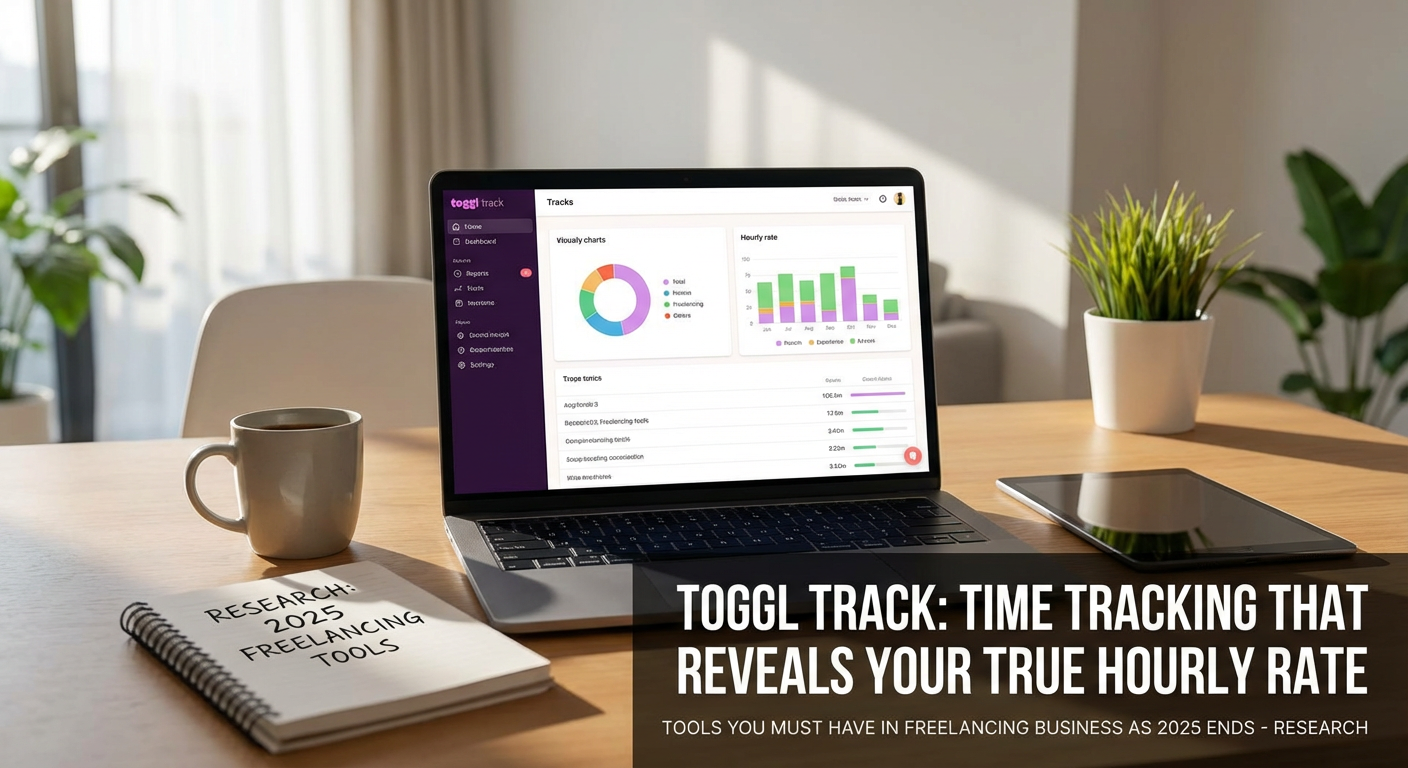
  2. Toggl Track: Time Tracking That Reveals Your True Hourly RateToggl Track: Time Tracking That Reveals Your True Hourly Rate

    Most freelancers underestimate how long tasks actually take, which leads to underpricing and burnout. Toggl Track solves this by giving you hard data on where your time goes. After tracking for just a few weeks, you’ll see exactly which projects are profitable and which ones drain your resources.

    The reports show you patterns you might miss otherwise. You might discover that certain client types require twice as much communication time, or that specific project types consistently run over budget. This information lets you adjust your pricing structure based on actual time investment, not estimates.

    Freelancers who use Toggl religiously often report raising their rates by 20 to 40 percent once they see the real numbers. The tool integrates with most project management platforms, so tracking becomes automatic rather than a chore. The mobile app ensures you capture every minute, even when working away from your desk.

  3. QuickBooks Self-Employed: Financial Clarity That Reduces Tax Stress

    Knowing your numbers isn’t optional if you want to grow. QuickBooks Self-Employed tracks income, expenses, and tax obligations in real time, giving you an accurate picture of your actual profit. Many freelancers think they’re doing better than they are until tax season hits. This tool prevents that painful surprise.

    The automatic mileage tracking and receipt capture features mean you never miss a deduction. Users typically report saving hundreds or even thousands on their tax bills simply by capturing expenses they would have forgotten. The quarterly tax estimates help you set aside the right amount, so you’re never scrambling for cash when payments are due.

    The profit and loss reports show you month-over-month trends, making it easy to spot slow periods before they become problems. Freelancers using this tool consistently make better financial decisions because they’re working with actual data instead of rough guesses.

  4. Grammarly Premium: Polish That Converts Readers Into Clients

    Communication quality directly impacts how clients perceive your professionalism. Grammarly Premium goes beyond basic spell-check to analyze tone, clarity, and engagement level. For freelancers who write proposals, emails, or content, this tool measurably improves response rates.

    The tone detector helps you match your message to the situation, whether you need to sound confident in a proposal or empathetic in a client apology. The clarity suggestions eliminate confusing sentences that might cause clients to choose a competitor who communicates more clearly. Writers using Grammarly often see fewer revision requests because their first drafts are cleaner.

    The plagiarism checker protects your reputation by ensuring all content is original. For content writers and marketers, this feature alone can prevent career-damaging mistakes. The browser extension works everywhere you type, so your professional image stays consistent across all platforms.

  5. Calendly: Scheduling Automation That Recovers Lost Time

    The back-and-forth of scheduling calls wastes hours every week. Calendly eliminates this completely by letting clients book directly into your available slots. Freelancers who switch to Calendly typically recover five to ten hours per month that were previously lost to email ping-pong.

    The tool integrates with your existing calendar and video conferencing platforms, creating a smooth experience for clients. You can set different meeting types with varying durations and buffer times, ensuring you’re never overbooked. The automatic time zone detection prevents the confusion that often leads to missed meetings.

    The reduction in no-shows is particularly valuable. Calendly sends automatic reminders, and users report that client attendance rates improve noticeably. When you consider that a single missed consultation might represent hundreds of dollars in lost opportunity, the return on investment becomes clear.

  6. Ahrefs or SEMrush: Data That Validates Your Marketing Decisions

    If you offer any digital marketing services, you need tools that prove your recommendations work. Ahrefs and SEMrush provide the competitive research and keyword data that turn opinions into evidence-based strategies. Freelancers who use these tools can show clients exactly why certain approaches will generate results.

    The site audit features identify specific problems that are hurting client rankings, giving you a clear action plan with measurable impact. When you can demonstrate that fixing these issues led to traffic increases, clients renew contracts and refer others. The backlink analysis helps you build link-building strategies based on what actually works in each niche.

    Freelancers in SEO, content marketing, and digital strategy fields often justify their entire subscription cost with a single project. The ability to provide clients with professional reports backed by industry-standard data builds trust and justifies premium pricing.

  7. Notion: A Centralized System That Prevents Dropped Balls

    Disorganization costs freelancers clients and opportunities. Notion creates a single workspace where you can manage projects, track client information, store templates, and maintain your knowledge base. The measurable benefit comes from fewer missed deadlines and faster project completion.

    Freelancers who build proper systems in Notion report cutting their administrative time in half. You can create databases that track project status, client communication history, and recurring tasks. The template feature means you never start from scratch, whether you’re onboarding a new client or beginning a familiar project type.

    The collaboration features let clients view project progress in real time, which reduces status update meetings and builds confidence in your process. When clients can see you’re organized and on top of details, they’re more likely to send repeat business and larger projects.

  8. Loom: Video Communication That Closes Deals Faster

    Text-based communication often fails to convey enthusiasm and expertise. Loom lets you record quick video messages that show your personality and explain complex ideas clearly. Freelancers using Loom in proposals report higher acceptance rates compared to text-only pitches.

    The ability to walk a client through your process or show them exactly what you’re proposing removes ambiguity. You can record your screen while explaining a strategy, or use the camera to deliver a personal pitch. Recipients can watch on their own schedule and replay sections they want to review.

    The analytics show you when clients watch your videos and how much they view, giving you valuable feedback on engagement. Freelancers in design, development, and consulting fields find that Loom reduces revision rounds because clients understand the deliverables better from the start. The time saved on explanations and corrections adds up quickly.

  9. Canva Pro: Design Speed That Increases Project Capacity

    Even if you’re not a designer, you need to create professional-looking graphics for proposals, social media, and client deliverables. Canva Pro provides templates and tools that let you produce quality designs in minutes instead of hours. The time savings directly translate to taking on more billable work.

    The brand kit feature ensures all your materials look consistent, which reinforces your professional image. You can save client brand colors and fonts, then produce on-brand materials quickly for ongoing projects. The background remover and premium stock photo library mean you’re not hunting across multiple platforms for assets.

    Freelancers who add design services to their offerings using Canva often increase their project values by 20 to 50 percent. The tool lowers the barrier to providing additional value without requiring years of design training. Templates for presentations, social graphics, and reports help you deliver polished work that clients appreciate.

  10. HubSpot CRM: Client Relationship Management That Drives Repeat Business

    Most freelancers lose potential income by failing to stay in touch with past clients. HubSpot’s free CRM tracks all your client interactions, reminds you to follow up, and helps you identify opportunities for additional services. The organized approach to relationships directly increases your client lifetime value.

    You can set reminders to check in with clients after project completion, during slow seasons, or when you launch new services. The email tracking shows you when clients open messages, helping you time follow-ups perfectly. The pipeline view lets you see exactly where potential projects stand and which ones need attention.

    Freelancers who implement a CRM consistently report that 30 to 50 percent of their income comes from repeat clients and referrals. The tool makes relationship management systematic rather than random, ensuring no opportunity falls through the cracks. The mobile app means you can update client information and respond to inquiries from anywhere.

The tools on this list share one critical quality: they help you measure and improve your freelancing business performance. Each one provides concrete data or time savings that directly impact your income and efficiency. Start with the tools that address your biggest bottlenecks, whether that’s finding clients, managing time, or staying organized. Track your results for a few months, and you’ll see which tools pay for themselves many times over. The freelancers who consistently earn more and stress less are the ones who treat their business like a business, complete with the right tools and systems to support sustainable growth.

Freelance Productivity Tools Compared: 10 Must-Have Options Reviewed

Freelance Productivity Tools Compared: 10 Must-Have Options Reviewed

Choosing the right productivity tools for your freelance business can feel overwhelming when dozens of options promise similar benefits. This guide takes a comparison approach, examining the strengths and weaknesses of essential tools so you can make informed decisions. Whether you need project management, time tracking, or client communication solutions, understanding the trade-offs helps you build a stack that actually works for your specific workflow.

  1. Legiit: Freelance Marketplace with Built-In Client ManagementLegiit: Freelance Marketplace with Built-In Client Management

    Legiit stands out as both a marketplace and a productivity platform for freelancers. Unlike pure project management tools, it combines client acquisition with workflow tools, letting you find work and manage it in one place. The advantage here is consolidation, you avoid juggling separate platforms for finding clients and delivering work.

    The trade-off is specialization. While Legiit excels at connecting freelancers with clients and handling transactions securely, teams already established with dedicated project software might find migration challenging. However, for solo freelancers or small agencies looking to grow their client base while maintaining organized workflows, Legiit offers a balanced solution that addresses both business development and daily operations. The platform also provides seller dashboards that track orders, deadlines, and communications, reducing the need for external tools.

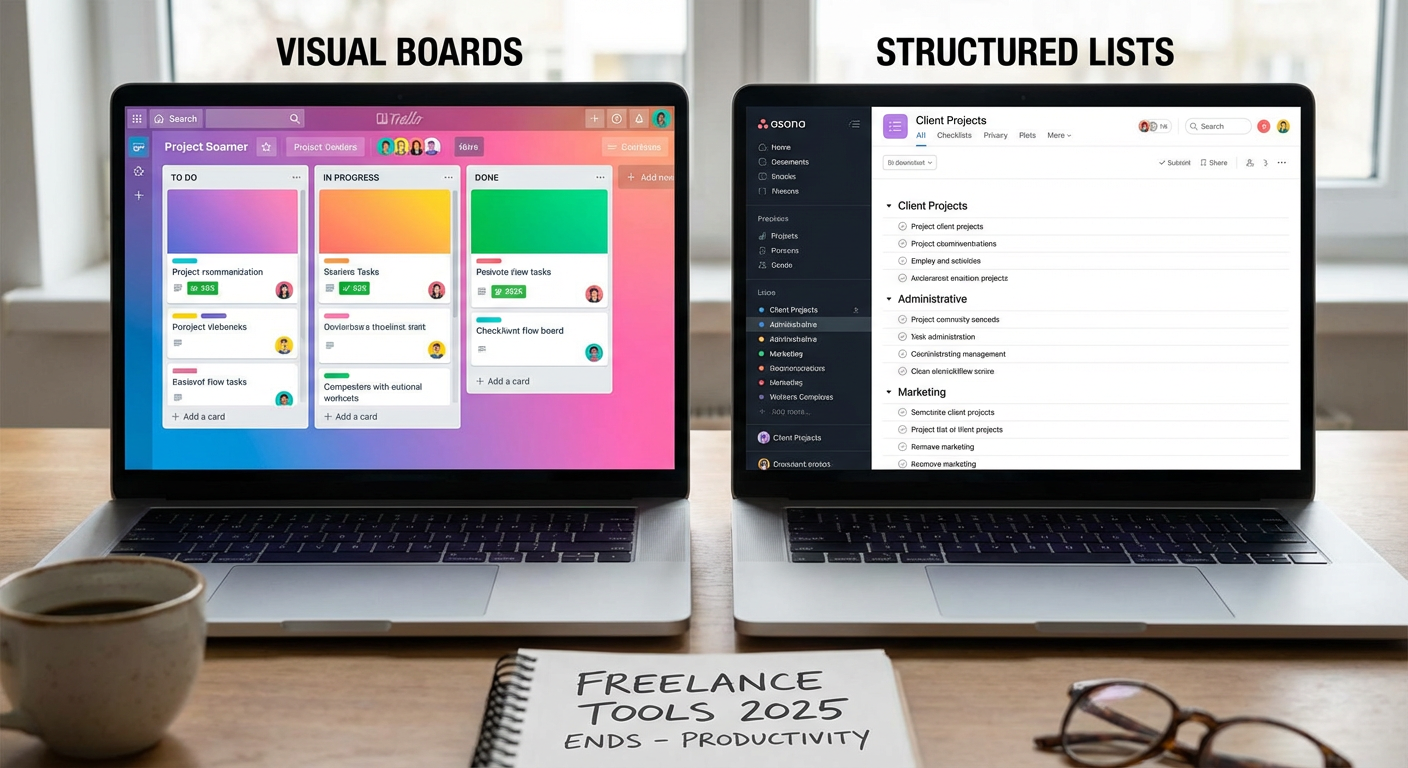
  2. Trello Versus Asana: Visual Boards or Structured ListsTrello Versus Asana: Visual Boards or Structured Lists

    Trello uses a kanban-style board system that appeals to visual thinkers. You move cards across columns, making progress feel tangible and workflows easy to grasp at a glance. It shines for simple projects and solo freelancers who want flexibility without complexity. The downside is that Trello can become messy with larger projects, requiring power-ups and workarounds for features that competitors include by default.

    Asana takes a more structured approach with list views, timelines, and detailed task dependencies. This makes it better suited for complex projects with multiple moving parts and deadlines that depend on each other. The learning curve is steeper than Trello, and some freelancers find the interface cluttered. If you manage straightforward projects with clear stages, Trello probably fits better. If you coordinate multi-phase work with dependencies and need robust reporting, Asana justifies the extra complexity.

  3. Toggl Track Versus Clockify: Premium Features or Free Forever

    Both tools track time spent on projects, but their pricing models create different value propositions. Toggl Track offers a polished interface, detailed reports, and calendar integrations that feel professional and refined. The free plan works for individuals, but teams and advanced features require paid tiers that can add up quickly.

    Clockify positions itself as free for unlimited users and projects, making it attractive for budget-conscious freelancers and growing teams. The interface feels less polished, and some advanced reporting features exist only in paid plans, but the core functionality remains accessible without payment. Choose Toggl if you value interface design and don’t mind paying for premium features. Choose Clockify if you need team time tracking without monthly fees and can tolerate a more basic experience.

  4. Notion Versus Evernote: All-in-One Workspace or Dedicated Note-Taking

    Notion has become popular as an all-in-one workspace where you can manage notes, databases, wikis, and project boards in interconnected pages. This flexibility means you can build exactly the system you need, from client databases to content calendars. The downside is setup time, Notion requires configuration and experimentation before it becomes truly useful, and the blank canvas can feel paralyzing.

    Evernote focuses specifically on note-taking and information capture, doing fewer things but doing them reliably. Clipping web articles, organizing research, and finding notes through search works smoothly without much setup. However, Evernote lacks the database and relational features that make Notion powerful for project management. If you want one tool that adapts to multiple needs and you enjoy customization, Notion rewards the investment. If you primarily need reliable note capture and search without building custom systems, Evernote delivers faster value.

  5. Slack Versus Microsoft Teams: Startup Culture or Enterprise Integration

    Slack built its reputation on making team communication feel casual and accessible. Channels, direct messages, and integrations with hundreds of apps create a hub where remote freelancers and their clients can collaborate. The interface feels modern and the emoji reactions add personality. The weakness appears when you need video calls or document collaboration, Slack relies on integrations rather than native solutions, which can fragment the experience.

    Microsoft Teams integrates deeply with Office 365, offering video meetings, file storage, and document editing within one ecosystem. For clients already using Microsoft products, Teams feels natural and reduces platform switching. The interface can feel corporate and less intuitive than Slack, and the app sometimes runs slowly. Freelancers working with enterprise clients often need Teams because that’s what the client uses. Freelancers with startup or agency clients might prefer Slack’s lighter, more flexible feel.

  6. Google Workspace Versus Microsoft 365: Browser-Based Simplicity or Desktop Power

    Google Workspace centers on browser-based apps like Docs, Sheets, and Drive that work seamlessly across devices without installation. Real-time collaboration feels natural, and the interface stays simple enough that most clients can jump in without training. Storage integrates with Gmail, making file sharing straightforward. The limitation shows up in advanced features, Google Sheets can’t match Excel for complex formulas and data analysis, and Docs lacks some formatting options that Word provides.

    Microsoft 365 offers desktop applications with deep feature sets that professionals in finance, design, and technical writing often require. The cloud versions exist but feel like simplified alternatives to the real desktop apps. Collaboration works well but doesn’t feel as smooth as Google’s native approach. If you work with clients who send complex Excel files or need precise Word formatting, Microsoft makes sense. If you prioritize accessibility, cross-device work, and straightforward collaboration, Google provides a cleaner experience.

  7. Grammarly Versus ProWritingAid: Quick Checks or Deep Analysis

    Grammarly focuses on catching errors quickly with a clean interface that works across browsers, email, and documents. The tone detector and clarity suggestions help polish client communications and deliverables without requiring writing expertise. The free version catches basic mistakes, while premium adds style suggestions and plagiarism detection. The weakness is depth, serious writers often find Grammarly’s suggestions surface-level and occasionally incorrect.

    ProWritingAid offers more detailed reports on writing style, including readability scores, repeated words, sentence length variation, and structural issues. Writers who want to improve their craft appreciate this depth, but the volume of suggestions can feel overwhelming for quick edits. The interface also feels less polished than Grammarly. For freelancers who write occasionally and want fast proofreading, Grammarly works better. For professional writers and editors who want comprehensive feedback, ProWritingAid justifies the steeper learning curve.

  8. Calendly Versus Acuity Scheduling: Simple Booking or Customized Appointments

    Calendly solves one problem elegantly: letting clients book time on your calendar without email back-and-forth. You set your availability, share a link, and clients pick a slot. The free tier covers basic needs, and the interface stays simple enough that even non-technical clients navigate it easily. The limitation appears in customization, advanced workflows like intake forms, payment collection, and multiple team member coordination require paid plans.

    Acuity Scheduling (owned by Squarespace) provides more control over the booking experience with custom forms, package sales, and class scheduling built in from lower pricing tiers. This makes it appealing for freelancers who sell coaching sessions or workshops that need payment upfront. The interface feels busier and takes longer to configure. Choose Calendly if you need straightforward meeting scheduling and value simplicity. Choose Acuity if your freelance service involves selling scheduled sessions that require payments, forms, or package options.

  9. LastPass Versus 1Password: Budget Security or Premium Experience

    Both password managers solve the critical problem of securing client logins, financial accounts, and business credentials. LastPass offers a functional free tier for individual use, making it accessible for freelancers just starting to take security seriously. The interface works across devices, though it feels dated compared to newer competitors. Premium features like emergency access and family sharing cost extra but remain affordable.

    1Password charges from the start but delivers a more refined experience with better design, faster performance, and features like travel mode that temporarily removes sensitive vaults when crossing borders. The security model (requiring both a master password and secret key) adds protection but also means losing access is harder to recover from. For freelancers on tight budgets who need basic password management, LastPass provides adequate protection. For those handling sensitive client data who want the best security and user experience, 1Password justifies the subscription cost.

  10. Zapier Versus Make (formerly Integromat): Simplicity or Advanced Control

    Zapier popularized workflow automation for non-technical users by making it simple to connect apps and automate repetitive tasks. Creating a zap that sends Slack notifications when you receive payment or adds new clients to your CRM requires no coding. The trade-off is cost and control, Zapier charges per task, which adds up quickly for high-volume workflows, and complex logic requires workarounds.

    Make offers more powerful automation with visual workflow builders that handle complex branching, loops, and data transformation. The pricing model charges for operations rather than individual tasks, often resulting in lower costs for heavy users. However, the increased power comes with increased complexity, Make requires more technical understanding to use effectively. Freelancers automating simple, low-volume tasks should start with Zapier’s approachable interface. Freelancers running high-volume automations or needing complex conditional logic will benefit from Make’s power and pricing model once they invest time learning it.

The right productivity tools depend on your specific freelance situation rather than universal best choices. Consider your budget, technical comfort level, and whether you prioritize simplicity or advanced features. Many freelancers start with free or simple options and graduate to more sophisticated tools as their business grows. Test a few options in each category, pay attention to which ones you actually use rather than which ones seem impressive, and remember that the best tool is the one that fits naturally into your daily workflow without requiring constant attention.

3 Future-Ready Communication Tools Every Freelancer Needs to Stay Competitive

3 Future-Ready Communication Tools Every Freelancer Needs to Stay Competitive

The way we communicate as freelancers is changing faster than ever before. What worked perfectly well a few years ago might leave you looking outdated or unprofessional tomorrow. If you want your freelancing business to thrive for years to come, you need communication tools that can grow with you, adapt to new client expectations, and keep you connected no matter how technology shifts. This list focuses on three communication solutions built for longevity. These aren’t just tools that solve today’s problems. They’re platforms designed to evolve, scale, and support your business through whatever comes next.

  1. Legiit: The All-in-One Platform That Grows With Your Freelance BusinessLegiit: The All-in-One Platform That Grows With Your Freelance Business

    When you think about future-proofing your freelance communication, you need more than just a messaging app. You need a complete system that handles client communication, project management, payments, and service delivery all in one place. That’s exactly what Legiit offers, and it’s why so many freelancers are making the switch to a platform that does it all.

    Legiit is built specifically for freelancers and service providers who want to run their entire business from a single hub. Instead of juggling between email, payment processors, project boards, and separate messaging apps, you can handle everything through Legiit. Clients can find your services, communicate with you directly, approve deliverables, and pay you without ever leaving the platform. This creates a smooth experience that makes you look polished and professional.

    What makes Legiit particularly smart for the long term is how it handles the business side of freelancing. You’re not just getting a communication tool. You’re getting a marketplace where potential clients can discover your services, a workspace where you can manage multiple projects at once, and a payment system that protects both you and your clients. As your business grows and you take on more work, Legiit scales with you. You can add team members, create service packages, build a portfolio, and establish long-term client relationships all within the same ecosystem.

    The messaging system inside Legiit keeps all your project communication organized by client and order. You never have to dig through a crowded inbox to find that one message from three weeks ago. Everything related to a specific project lives in one thread, with all the context you need right there. This becomes incredibly valuable as you work with more clients and juggle more projects. You can respond quickly, stay organized, and maintain the kind of communication quality that turns one-time buyers into repeat customers.

    Another reason Legiit is built for the future is its focus on the freelance economy itself. While general communication tools are designed for everyone, Legiit understands the specific needs of service providers. The platform keeps improving with features that matter to freelancers, like better proposal tools, smarter notifications, and ways to showcase your expertise. When you invest time in building your presence on Legiit, you’re not just using a tool. You’re positioning yourself in a growing marketplace where clients actively look for the services you offer.

    For freelancers who want to stop piecing together different apps and start running a more cohesive business, Legiit is the kind of solution that makes sense today and will continue making sense as your needs change. It reduces friction, saves time, and gives you a professional foundation that can support whatever direction your freelancing takes you.

  2. Asynchronous Video Messaging: Building Deeper Client Relationships Without More MeetingsAsynchronous Video Messaging: Building Deeper Client Relationships Without More Meetings

    Text-based communication is efficient, but it’s also easy to misinterpret. Tone gets lost. Nuance disappears. Complex ideas take forever to explain. That’s why asynchronous video messaging is quickly becoming one of the most valuable communication methods for freelancers who want to stand out and build stronger client relationships without filling their calendars with endless video calls.

    Tools like Loom, Vidyard, and Berrycast let you record short videos where you can explain concepts, walk through work in progress, provide feedback, or answer questions. Your face appears in a small bubble while you share your screen, so clients get the benefit of seeing you and hearing your voice while you show them exactly what you mean. This creates a much richer communication experience than text alone, and it does it on everyone’s own schedule.

    The strategic advantage here is time zone independence and flexibility. When you work with clients across different regions or continents, scheduling live calls becomes a logistical puzzle. Asynchronous video lets you communicate deeply without coordinating schedules. You record your update when it makes sense for you. Your client watches and responds when it makes sense for them. This keeps projects moving forward smoothly without the delays that come from waiting for the next available meeting slot.

    From a future-proofing perspective, video communication is only going to become more expected, not less. Clients are getting used to richer forms of digital interaction. The freelancers who learn to use video comfortably now will have a significant advantage over those who stick to text-only communication. Video makes you more memorable, more human, and more trustworthy. It’s harder for a client to forget about you or deprioritize your project when they’ve seen your face and heard your voice explaining your ideas.

    The best part is how these tools have gotten incredibly easy to use. You don’t need special equipment or editing skills. You click record, talk through what you want to say while showing your screen if needed, and then share a link. Most platforms offer free versions that give you everything you need to start. The videos are automatically hosted and easy to share, so there’s no technical friction for you or your clients.

    Many freelancers report that adding video messages to their communication mix has dramatically reduced misunderstandings and revisions. When clients can see exactly what you’re working on and hear you explain your thinking, they understand your work better. They feel more involved in the process. They trust you more because you’re not hiding behind text. This leads to happier clients, better reviews, and more referrals.

    As you build your freelance business for the long term, getting comfortable with asynchronous video will serve you well. It gives you the personal connection of face-to-face communication with the flexibility and efficiency of asynchronous work. That combination is exactly what modern freelancing demands, and it’s a skill set that will only become more valuable as remote work continues to evolve.

  3. Unified Communication Hubs: Bringing All Your Messages Into One Smart Workspace

    One of the biggest communication challenges freelancers face is message sprawl. Client A prefers email. Client B wants to text. Client C only responds on WhatsApp. Client D uses Slack. Before you know it, you’re checking six different apps throughout the day, missing messages, and feeling constantly scattered. This isn’t just annoying. It’s a real business risk that costs you time, creates stress, and makes you look disorganized when you miss something important.

    Unified communication hubs solve this problem by pulling messages from multiple channels into a single interface where you can see and respond to everything. Tools like Missive, Spike, and Front are designed specifically for this purpose. They connect your email accounts, team chat, SMS, and sometimes even social media messages into one organized workspace. Instead of switching between tabs and apps all day, you work from one place where all your communication lives.

    The future-proofing value here is about adaptability and control. As new communication platforms emerge and client preferences shift, you need a system that can absorb those changes without forcing you to completely restructure how you work. A good unified hub lets you add new channels as needed while maintaining your core workflow. When a client insists on using the latest messaging app, you can often integrate it into your existing system rather than adding yet another app to your daily routine.

    These tools also bring intelligence to your inbox. They can automatically categorize messages, set up rules for different types of communication, create shared inboxes if you work with a team, and provide better search and organization than standard email clients. Some offer features like snoozing messages until you’re ready to deal with them, setting reminders to follow up, and creating templates for common responses. All of this helps you handle higher volumes of communication without dropping balls.

    For freelancers who plan to scale their business, unified communication becomes even more critical. When you’re managing five clients, jumping between apps is manageable. When you’re managing twenty, it becomes impossible. Building your communication workflow around a hub now means you won’t have to overhaul everything later when your business grows. You’ll already have a system that can handle the increased load.

    The mental health benefit shouldn’t be overlooked either. Message sprawl creates constant low-level anxiety. You never quite know if you’ve checked everything. You worry about missing urgent requests. You feel pulled in too many directions. Consolidating your communication into one place gives you clarity and control. You can see at a glance what needs attention. You can prioritize effectively. You can close the app at the end of your workday knowing you’ve handled everything, rather than wondering if there’s a message waiting in some app you forgot to check.

    Different unified hubs specialize in different things. Some focus on team collaboration, making them perfect if you work with other freelancers or contractors. Others prioritize email and are better if most of your communication happens there but you need to monitor a few other channels. The key is finding one that matches your current needs while offering room to grow. Look for platforms that have been around for a while and continue adding integrations. That’s a good sign they’ll stick around and keep improving.

    Investing time in setting up a unified communication system now will pay dividends for years. You’ll save hours every week. You’ll miss fewer messages. You’ll feel more organized and professional. And you’ll have built a foundation that can adapt as your business and the communication landscape continue to change. That’s exactly the kind of forward-thinking approach that separates thriving freelancers from those who stay stuck in reactive mode.

Communication isn’t just about responding to messages. It’s about building relationships, managing expectations, and presenting yourself as a professional who’s serious about their business. The tools you choose today will shape how efficiently you work and how clients perceive you for years to come. By focusing on platforms that offer real longevity, like Legiit’s all-in-one freelance ecosystem, asynchronous video for richer interactions, and unified hubs that bring order to message chaos, you’re setting yourself up for sustainable success. These aren’t trendy solutions that will disappear in six months. They’re solid foundations that will grow more valuable as your business expands and the freelance landscape continues to shift. Choose wisely, invest the time to use them well, and you’ll find that great communication becomes one of your strongest competitive advantages.

10 Proven Tools That Deliver Measurable Results for Premium Freelance Operations

10 Proven Tools That Deliver Measurable Results for Premium Freelance Operations

Running a successful freelancing business requires more than good intentions. You need tools that actually move the needle on revenue, client satisfaction, and time saved. This list focuses on premium offerings with documented track records of helping freelancers achieve concrete outcomes. Whether you measure success by billable hours recovered, client retention rates, or project completion speed, these tools have demonstrated their worth in real-world scenarios. Each recommendation comes with a focus on what you can expect to gain in practical, measurable terms.

  1. Legiit: Platform That Converts Visibility Into Closed DealsLegiit: Platform That Converts Visibility Into Closed Deals

    Legiit stands out for freelancers who need more than just another marketplace profile gathering dust. The platform specializes in digital services and has helped thousands of freelancers generate consistent income streams through its buyer-focused interface. What makes this particularly effective is the built-in trust mechanisms and service packaging structure that reduce negotiation friction and speed up the buying process.

    Freelancers report significantly higher conversion rates compared to traditional freelance platforms because buyers arrive with clearer expectations and budgets already in mind. The platform’s focus on premium services means you’re competing less on price and more on expertise and results. Many users cite reduced time spent on client acquisition, allowing them to focus those hours on actual billable work instead.

  2. Toggl Track: Time Monitoring That Reveals Your Most Profitable WorkToggl Track: Time Monitoring That Reveals Your Most Profitable Work

    Accurate time tracking transforms how you price services and identify which clients actually make you money. Toggl Track provides detailed analytics that show exactly where your hours go, down to specific tasks and projects. This data becomes invaluable when you realize that some clients consume twice the time for half the revenue.

    Freelancers who implement rigorous time tracking typically discover they’ve been underpricing certain services by 30 to 50 percent. The reporting features make it simple to spot patterns, like recurring tasks that eat up administrative time without adding value. Armed with this information, you can restructure your offerings, raise rates strategically, or fire clients who drain resources. The premium version includes features like billable rates tracking and profit calculations that directly connect your hours to your bank account.

  3. HoneyBook: Client Management That Shortens Your Sales Cycle

    HoneyBook combines proposals, contracts, invoicing, and scheduling into one system that measurably reduces the time between initial contact and signed agreement. The platform reports that users close deals 50 percent faster on average because everything a client needs to say yes is delivered in one polished package.

    The automation features handle follow-ups and reminders without manual intervention, which means fewer deals fall through the cracks due to simple communication gaps. Templates and workflows can be refined based on which versions produce the highest acceptance rates. For freelancers handling multiple prospects simultaneously, this systematized approach prevents the chaos that comes from juggling spreadsheets, email threads, and separate payment processors. The result is a smoother client experience that translates directly into faster cash flow and higher close rates.

  4. Ahrefs: SEO Intelligence That Multiplies Organic Lead Generation

    For freelancers who rely on content marketing or maintain a professional website, Ahrefs provides competitive intelligence that turns guesswork into strategy. The tool shows exactly which keywords drive traffic to competitor sites, what content performs best in your niche, and where backlink opportunities exist.

    Freelancers who invest in Ahrefs typically see their organic search traffic double or triple within months when they apply the insights correctly. The site audit feature identifies technical issues that might be suppressing your search rankings, giving you a clear action list for improvement. Rather than creating content based on hunches, you can target terms with proven search volume and manageable competition. This data-driven approach to visibility consistently outperforms casual blogging, and the tool pays for itself when it brings in even one quality client per month.

  5. Loom: Video Communication That Reduces Revision Rounds

    Miscommunication costs freelancers both time and money through endless revision cycles. Loom allows you to record quick video explanations, walkthroughs, and feedback that clarify complex points far better than text alone. Clients can see exactly what you mean, reducing the back-and-forth that stretches projects beyond their budgets.

    Many freelancers report cutting revision requests by half after implementing video communication for key project milestones. A five-minute Loom video explaining design choices or development decisions prevents hours of confused email exchanges. The tool also works well for onboarding new clients, where you can record standard processes once and share them repeatedly. This efficiency gain compounds across multiple projects, freeing up billable hours while simultaneously improving client satisfaction scores.

  6. QuickBooks Online: Financial Tracking That Simplifies Tax Time and Cash Flow

    Professional accounting software stops being optional when your freelance income reaches a level where mistakes get expensive. QuickBooks Online automates expense categorization, tracks mileage, manages invoices, and generates reports that show your actual profitability after all costs.

    Freelancers save an average of 10 to 15 hours during tax preparation because everything is already organized and categorized correctly. The cash flow projections help you spot lean months in advance, allowing you to adjust spending or push harder on sales before problems develop. Integration with bank accounts means transactions flow in automatically, reducing manual data entry to nearly zero. The premium plans include features like project-based profitability tracking, which reveals which service types or client segments deliver the best margins. This information directly informs strategic decisions about where to focus your business development efforts.

  7. Grammarly Premium: Writing Polish That Elevates Perceived Professionalism

    Every email, proposal, and deliverable you send shapes how clients perceive your attention to detail. Grammarly Premium catches not just spelling errors but tone issues, clarity problems, and stylistic inconsistencies that undermine your professional image. The difference between good writing and sloppy writing can be the difference between a renewed contract and a client who quietly moves on.

    Studies show that error-free communication increases perceived competence and trustworthiness significantly. For freelancers in competitive markets, this perception gap matters when clients choose between similar candidates. The plagiarism checker protects you from accidental content duplication, while the vocabulary suggestions help you communicate more precisely. Premium features like tone detection ensure your messages land the way you intend, whether you’re negotiating rates or delivering difficult feedback. The tool works across platforms, improving everything from social media posts to long-form content.

  8. Calendly: Scheduling Automation That Eliminates Time Zone Confusion

    The back-and-forth of scheduling calls wastes surprising amounts of time and creates friction in the client relationship. Calendly eliminates this entirely by showing your availability and letting clients book directly. The premium tiers handle multiple meeting types, team scheduling, and integration with video conferencing platforms.

    Freelancers report saving two to three hours per week just from eliminating scheduling emails. More importantly, the reduced friction means more meetings actually happen instead of fading away in endless email threads. The system automatically handles time zone conversions, which prevents embarrassing no-shows and demonstrates professionalism to international clients. Buffer time settings ensure you don’t end up with back-to-back calls that leave no room for preparation. This small efficiency gain compounds over hundreds of meetings per year, and the professional appearance reinforces that you run a serious operation.

  9. Adobe Creative Cloud: Industry Standard Tools That Command Premium Rates

    For creative freelancers, Adobe Creative Cloud remains the benchmark that clients expect and competitors use. While alternatives exist, the ability to work seamlessly with client files and deliver in industry-standard formats often determines whether you can bid on premium projects. Photoshop, Illustrator, InDesign, and Premiere Pro set the baseline for professional output in their respective fields.

    Freelancers using professional-grade tools consistently command higher rates because clients associate these tools with serious expertise. The integration between applications speeds up workflows significantly, and the regular updates ensure you have access to the latest features that clients request. Cloud storage and collaboration features enable smooth handoffs with clients and team members. While the subscription cost is substantial, creative professionals typically recover this investment within their first project or two each month. The tool quality directly impacts your output quality, which in turn affects both your rates and your ability to attract high-end clients.

  10. Notion: Centralized Workspace That Reduces Context Switching Costs

    Jumping between multiple apps for notes, tasks, documents, and databases fragments your attention and slows down work. Notion consolidates these functions into one flexible workspace where everything connects. The premium plans add unlimited file uploads, version history, and advanced permissions for client collaboration.

    Freelancers who migrate to a unified system like Notion report significant productivity gains simply from reducing the mental overhead of managing information across scattered platforms. Client portals can be built directly in Notion, giving customers visibility into project status without constant update requests. The database features allow you to build custom systems for tracking leads, managing projects, or organizing research that fit your exact workflow. Templates can be reused across similar projects, reducing setup time for recurring work. The result is less time spent on administrative overhead and more time available for billable client work or business development activities.

The right tools don’t just make work easier. They produce measurable improvements in how much you earn, how efficiently you operate, and how professional you appear to clients. Each tool on this list has a track record of delivering concrete results for freelancers who implement them properly. Start by identifying your biggest bottleneck, whether that’s client acquisition, time management, or communication efficiency, then invest in the tool that directly addresses that gap. Track your metrics before and after implementation so you can see the actual return on your investment. Premium tools cost money, but they should pay for themselves multiple times over through increased revenue, recovered time, or improved client retention.

13 Future-Ready Marketplaces for Link Building That Prioritize Transparency

13 Future-Ready Marketplaces for Link Building That Prioritize Transparency

Link building isn’t going anywhere, but the way we approach it is changing fast. Search engines are getting smarter, penalties are more severe, and buyers are demanding more accountability from the marketplaces they use. If you’re planning your link building strategy for the long haul, you need platforms that are built to adapt, evolve, and maintain integrity as standards shift. This list highlights thirteen marketplaces that combine transparency with forward-thinking features, helping you build a backlink profile that won’t crumble when algorithms change or industry standards tighten.

  1. LegiitLegiit

    Legiit has positioned itself as a sustainable option for buyers who want to work with real service providers in a way that scales. The platform focuses on verified sellers who offer a range of digital marketing services, including link building packages with clear deliverables. What makes Legiit particularly relevant for long-term planning is its emphasis on community reputation and transparent seller profiles, which helps buyers make informed decisions based on real feedback rather than promises.

    The platform allows you to filter providers by niche, response time, and completed orders, which means you’re not gambling on untested vendors. As search algorithms continue to prioritize authentic, high-quality links over spammy tactics, having a marketplace that vets its sellers and encourages accountability becomes more valuable. Legiit‘s model supports repeat relationships between buyers and sellers, which is exactly the kind of consistency you need when building a backlink strategy that lasts.

  2. Authority BuildersAuthority Builders

    Authority Builders operates on a model that favors quality over volume, which is exactly where the industry is heading. They focus exclusively on high-authority guest posts and niche edits, with a transparent vetting process for every site in their network. You can see domain metrics, traffic data, and editorial guidelines before committing to a placement, which reduces the risk of wasting budget on links that won’t hold up over time.

    Their pricing is clear, their turnaround times are realistic, and they don’t oversell what they can deliver. As Google continues to crack down on link schemes and low-quality networks, working with a marketplace that prioritizes editorial standards and real traffic makes your backlink profile more resistant to future penalties. Authority Builders also provides detailed reports after each placement, so you can track performance and adjust your strategy as needed.

  3. Fatjoe

    Fatjoe has built a reputation for offering link building services that are both transparent and scalable, which is a rare combination. They provide a range of options from blogger outreach to niche edits, and every order comes with clear reporting and turnaround expectations. What sets them apart for future-focused buyers is their commitment to staying on the right side of search engine guidelines while still delivering links that actually move the needle.

    Their dashboard lets you track orders in real time, see which sites your links are placed on, and review content before it goes live. This level of visibility is important when you’re building a strategy that needs to withstand algorithm updates and increased scrutiny. Fatjoe also offers a satisfaction guarantee, which shows confidence in the quality of their network and gives you recourse if a placement doesn’t meet expectations.

  4. LinksThatRank

    LinksThatRank takes a data-driven approach to link building, which aligns well with the direction search engines are moving. They use proprietary metrics to evaluate the strength and relevance of every site in their network, and they’re transparent about what makes a link valuable. Their focus is on links that actually improve rankings, not just links that look good on a spreadsheet.

    What makes this marketplace particularly future-ready is their willingness to adapt their criteria as search algorithms evolve. They regularly update their vetting process based on what’s working in the current landscape, and they communicate those changes to clients. You get detailed reports for every link, including placement URLs, anchor text, and follow-up monitoring. This kind of accountability is what separates sustainable link building from short-term tactics that backfire down the line.

  5. The Hoth

    The Hoth has been around long enough to understand how the link building landscape has changed, and they’ve adapted their services accordingly. They offer a mix of guest posts, niche edits, and content syndication, all with transparent pricing and clear deliverables. Their platform provides detailed metrics for every site in their network, so you can evaluate whether a placement aligns with your long-term goals.

    One of the reasons The Hoth remains relevant is their focus on content quality and editorial standards. They don’t just slap a link on a low-quality blog and call it a day. Instead, they work with real publishers who have established audiences, which means your links are more likely to withstand future algorithm changes. Their reporting tools also let you track the impact of each link over time, which helps you refine your strategy as you go.

  6. Loganix

    Loganix operates with a white-label model that’s particularly useful for agencies and consultants who need a reliable partner for client work. They provide guest posts, niche edits, and content creation services, all with a transparent vetting process and clear communication. What makes them a solid choice for the future is their emphasis on compliance and risk management.

    They avoid private blog networks and other tactics that carry long-term risk, focusing instead on real sites with genuine traffic and engagement. Every order comes with a detailed report that includes domain metrics, placement URLs, and content samples. Loganix also offers customer support that can help you troubleshoot issues or adjust your strategy based on changing best practices. This kind of partnership approach is valuable when you’re building a backlink profile that needs to last for years, not just months.

  7. OutreachMama

    OutreachMama specializes in manual outreach and relationship building, which is a slower but more sustainable approach to link acquisition. They handle everything from content creation to publisher negotiations, and they’re transparent about the process every step of the way. You get access to a dashboard where you can see which sites they’re targeting, track outreach progress, and review placements before they go live.

    This hands-on approach is particularly valuable as search engines get better at identifying manipulative link schemes. OutreachMama focuses on earning links through genuine relationships and high-quality content, which means your backlink profile looks more natural and is less likely to trigger penalties. They also provide ongoing support and strategy consultation, which helps you adapt your approach as industry standards shift. For buyers who want a partner rather than just a vendor, OutreachMama offers the kind of transparency and accountability that supports long-term success.

  8. Respona

    Respona is a software platform that automates parts of the outreach process while still maintaining transparency and control. You can use it to find link opportunities, manage outreach campaigns, and track results, all within a single dashboard. What makes Respona future-ready is its focus on data and personalization, which are both becoming more important as generic outreach becomes less effective.

    The platform integrates with various SEO tools to help you identify high-quality link prospects, and it provides templates and automation features that save time without sacrificing authenticity. You maintain full visibility into every outreach attempt, every response, and every placement, which means you’re never in the dark about where your links are coming from. As the industry moves toward more sophisticated, relationship-based link building, tools like Respona give you the infrastructure to scale those efforts without losing the personal touch that makes outreach effective.

  9. Pitchbox

    Pitchbox is another platform that combines automation with transparency, making it easier to manage large-scale outreach campaigns without losing track of quality. It’s designed for agencies and in-house teams who need to coordinate multiple campaigns, track team performance, and maintain detailed records of every interaction. The platform integrates with SEO tools like Moz, Ahrefs, and SEMrush, so you can evaluate link opportunities based on current data.

    What sets Pitchbox apart for future-focused users is its emphasis on relationship management and follow-up. The platform tracks every email, response, and placement, and it provides analytics that help you understand what’s working and what isn’t. As link building becomes more competitive and publishers become more selective, having a system that helps you build and maintain relationships over time becomes critical. Pitchbox gives you the tools to do that at scale while still maintaining the transparency and accountability that search engines reward.

  10. BuzzStream

    BuzzStream is a relationship management platform built specifically for outreach and link building. It helps you find prospects, manage communication, and track results, all while keeping detailed records of every interaction. The platform is transparent by design, giving you full visibility into who you’ve contacted, what you’ve said, and what the outcomes were.

    This level of record-keeping is increasingly important as link building strategies mature and teams need to coordinate efforts across multiple campaigns. BuzzStream also integrates with various SEO and research tools, making it easier to evaluate opportunities based on current metrics. As the industry moves away from one-off link purchases and toward ongoing relationship building, platforms like BuzzStream provide the infrastructure you need to manage those relationships effectively. The transparency and documentation features also help you demonstrate the value of your work to clients or stakeholders, which is critical for securing ongoing support and budget.

  11. Linkody

    Linkody is primarily a backlink monitoring tool, but its transparency features make it valuable for anyone building a long-term link strategy. The platform tracks every backlink to your site, monitors changes in link status, and alerts you to any issues like broken links or lost placements. This kind of ongoing monitoring is essential as your backlink profile grows and becomes more complex.

    What makes Linkody particularly useful for future planning is its ability to help you identify which links are actually contributing to your rankings and which ones might be causing problems. The platform provides detailed metrics for every link, including domain authority, anchor text, and link type. As search engines continue to refine how they evaluate backlinks, having a tool that helps you maintain and audit your profile becomes more important. Linkody also offers competitor analysis features, so you can see what kinds of links are working for others in your space and adjust your strategy accordingly.

  12. LinkResearchTools

    LinkResearchTools is a comprehensive suite designed for serious SEO professionals who need deep insights into their backlink profiles. The platform offers tools for link analysis, risk assessment, and competitor research, all with a focus on transparency and data accuracy. You can evaluate the quality of your existing links, identify potentially harmful ones, and find new opportunities based on what’s working for competitors.

    This level of detail is increasingly important as search algorithms become more sophisticated and penalties become more targeted. LinkResearchTools helps you stay ahead of problems by identifying risky links before they cause damage, and it provides the data you need to make informed decisions about which link building tactics to pursue. The platform also offers training and support resources that help you stay current with best practices, which is valuable in an industry that changes as quickly as SEO does. For anyone serious about building a backlink profile that can withstand future algorithm updates, LinkResearchTools provides the transparency and analysis needed to make smart, strategic choices.

  13. Majestic

    Majestic has been a staple in the SEO community for years, and its transparency around backlink data makes it a valuable tool for anyone planning a long-term link building strategy. The platform provides detailed metrics for every link, including Trust Flow, Citation Flow, and topical relevance, which help you evaluate the quality and context of potential placements. You can also use Majestic to analyze competitor backlink profiles and identify opportunities that align with your goals.

    What keeps Majestic relevant as the industry evolves is its commitment to accurate, up-to-date data and its willingness to adapt its metrics as search engines change their criteria. The platform offers historical data that lets you track how backlink profiles change over time, which is useful for understanding long-term trends and avoiding tactics that might have worked in the past but don’t anymore. Majestic also provides API access and integrations with other tools, making it easy to incorporate backlink analysis into your broader SEO workflow. For strategic planners who want to base their link building decisions on solid data rather than guesswork, Majestic offers the transparency and depth needed to make confident choices.

Building a backlink profile that lasts requires more than just finding places to drop links. It requires working with platforms that prioritize transparency, adapt to changing standards, and support the kind of strategic thinking that keeps you ahead of penalties and algorithm shifts. The marketplaces and tools on this list offer the visibility, accountability, and forward-thinking features you need to build links that will still be valuable years from now. Choose partners who share your commitment to quality and long-term results, and you’ll build a foundation that supports growth no matter how the landscape changes.

10 Practical Tools for Your Freelancing Business: A Hands-On Guide Organized by Cost

10 Practical Tools for Your Freelancing Business: A Hands-On Guide Organized by Cost

Running a freelancing business means juggling clients, projects, invoices, and deadlines all at once. The right tools can make this balancing act much easier, but only if you know how to use them effectively. This guide breaks down ten essential tools by their cost categories, from free to premium, with specific tips on how to implement each one immediately. Whether you’re just starting out or refining your existing setup, you’ll find actionable advice that you can put into practice today.

  1. Legiit: Your First Stop for Finding Help and Growing Your Client BaseLegiit: Your First Stop for Finding Help and Growing Your Client Base

    Before investing in expensive software subscriptions, start by building your income streams and getting help with tasks that slow you down. Legiit is a freelancer marketplace where you can both offer your services to clients and hire other freelancers for work you need done. Here’s how to use it right away: create a clear, specific service listing with examples of your work, set your pricing based on what you can deliver reliably, and respond to inquiries within a few hours to build trust. On the flip side, when you need services like graphic design, content writing, or technical support, search for providers with strong reviews and detailed portfolios. Start with smaller projects to test quality before committing to larger contracts. This approach helps you earn money while staying lean on overhead costs.

    The platform works on a commission basis, so you only pay when you make a sale or hire someone. This makes it perfect for freelancers who want to keep their fixed costs low while still accessing a full marketplace of talent and potential clients.

  2. Wave: Free Accounting That Actually WorksWave: Free Accounting That Actually Works

    Wave offers completely free accounting software that handles invoicing, expense tracking, and basic financial reports. Set it up in under an hour by connecting your business bank account, creating your first invoice template with your branding, and categorizing your initial expenses. The key to making Wave work for you is consistency: spend fifteen minutes every Friday afternoon reviewing your transactions and assigning them to the correct categories.

    Create invoice templates for your most common service packages so you can bill clients in under two minutes. Turn on automatic payment reminders so you don’t have to chase late payments manually. Wave charges small fees for payment processing if clients pay by card, but the core accounting features remain free forever. This makes it ideal for freelancers who need professional financial tracking without monthly subscription fees eating into their profits.

  3. Google Workspace: Pay Only for What You Need

    Google Workspace starts at around $6 per month for the basic plan, giving you professional email, cloud storage, and collaboration tools. The practical setup: choose a domain name that matches your business name, set up your primary email address, and create three folder systems in Google Drive for client work, administrative documents, and marketing materials.

    Use Google Calendar to block out focused work time for each client project, and share specific calendars with clients so they can book meetings without the back-and-forth emails. Set up Google Forms for client intake questionnaires to standardize how you gather project requirements. The collaboration features mean you can share documents with clients and get real-time feedback without version control nightmares. Start with the basic plan and only upgrade to higher storage tiers when you actually need them, not preemptively.

  4. Notion: The Free Tier Handles Most Freelancer Needs

    Notion offers a free personal plan that gives solo freelancers more than enough functionality to organize their entire business. Spend your first hour building three core pages: a project tracker with columns for client name, deadline, status, and payment; a content calendar if you do any marketing; and a knowledge base where you store templates, contracts, and common responses to client questions.

    The database features let you create different views of the same information, so you can see all projects by deadline, by client, or by status with a single click. Use the web clipper to save inspiration, competitor research, and helpful articles directly into your Notion workspace. The mobile app syncs instantly, so you can update project statuses or check deadlines while away from your desk. Most freelancers never need to upgrade to the paid plans unless they’re collaborating with a team of more than ten people.

  5. Canva Pro: Worth the Mid-Range Investment for Visual Content

    Canva Pro costs around $13 per month and pays for itself quickly if you create any visual content for clients or your own marketing. The immediate action steps: create branded templates for your most common deliverables like social media graphics, presentation slides, or client reports. Use the background remover tool to clean up product photos or headshots without needing Photoshop skills. Set up brand kits with your colors, fonts, and logos so everything you create stays consistent.

    The content planner feature lets you schedule social media posts directly from Canva, eliminating the need for a separate scheduling tool. Download the mobile app and take photos with your phone, then edit and post them within minutes. The template library saves hours of design time, especially when you need something professional quickly. If you bill clients for design work or use graphics in your marketing, this tool typically pays for itself within the first month through time savings alone.

  6. Loom: Free Video Communication That Reduces Meeting Time

    Loom’s free plan allows up to 25 videos of five minutes each, which is plenty for most freelancers to communicate effectively with clients. Record quick screen shares to show clients progress on their projects, explain complex concepts that would take paragraphs to write out, or provide video responses to questions instead of scheduling calls. The practical workflow: when a client asks a question that needs context, hit record, show your screen while talking through the issue, and send them the link within minutes.

    This approach cuts down on unnecessary meetings while still maintaining personal connection. Create a library of common explanation videos, like how to access their project files or how to provide feedback, so you can reuse them with multiple clients. The video links work on any device without requiring clients to download software or create accounts. If you find yourself scheduling lots of short status update calls, Loom videos can replace most of them and give everyone their time back.

  7. Toggl Track: Time Tracking That Takes Seconds

    Toggl Track offers a free plan for solo users and premium plans starting around $10 per month for more features. Start tracking time today by creating one project for each active client, then simply hit start when you begin work and stop when you finish. The browser extension and mobile app mean you can track from anywhere without opening a separate application.

    Run weekly reports to see exactly where your time goes, then use this data to price your services more accurately or identify clients who require disproportionate amounts of communication time. If you bill hourly, the detailed time logs give clients transparent breakdowns of what you worked on. If you bill by project, the data helps you estimate future similar projects more accurately. Set up the Pomodoro timer feature to work in focused 25-minute blocks, which often increases your productivity while giving you natural break points throughout the day.

  8. Grammarly Premium: Catch Errors Before Clients Do

    Grammarly Premium runs about $12 per month and catches mistakes that the free version misses, including tone suggestions, clarity improvements, and advanced grammar issues. Install the browser extension so it works automatically in your email, project management tools, and anywhere else you write. The practical benefit shows up immediately in client communication: fewer misunderstandings from unclear writing, more professional-sounding proposals, and documents that require less revision.

    Use the tone detector before sending sensitive emails to clients, especially when discussing scope changes or payment issues. The plagiarism checker helps if you write content for clients and want to verify originality before delivery. Set your writing goals based on your audience, like formal for corporate clients and casual for creative industry clients, so the suggestions match your actual needs. If you write anything for clients or send more than a few emails per day, the time saved on revision and the reduction in communication errors usually justifies the cost.

  9. Calendly: Paid Plans Eliminate Scheduling Friction

    While Calendly offers a free plan, the paid tiers starting around $10 per month add features that save significant time for busy freelancers. Set up different meeting types for discovery calls, project kickoffs, and regular check-ins, each with appropriate time lengths and buffer times between meetings. Connect it to your Google Calendar or other calendar system so it only shows your actual availability, preventing double-bookings.

    The paid features let you require payment for consultation calls, send automatic reminders to reduce no-shows, and ask custom intake questions before the meeting so you show up prepared. Add your Calendly link to your email signature, website contact page, and proposal documents so potential clients can book time with you immediately instead of playing email tag. Configure your availability to protect your focused work time, like blocking out mornings for deep work and only offering meetings in the afternoon. This small monthly investment often returns hours of saved time each week.

  10. Adobe Creative Cloud: Premium Investment for Serious Creative Work

    Adobe Creative Cloud runs around $55 per month for the full suite, making it the most expensive tool on this list but necessary for many creative freelancers. If you do photography, video editing, graphic design, or web design professionally, the industry-standard tools often matter for client expectations and file compatibility. Start by mastering one application thoroughly rather than trying to learn everything at once: Photoshop for image editing, Premiere Pro for video, or Illustrator for vector graphics.

    Use Adobe Portfolio, included with your subscription, to build a professional website showcasing your work without additional costs. The cloud libraries feature lets you sync assets across applications, so color palettes and logos stay consistent across all your projects. Take advantage of Adobe’s tutorial library to learn advanced techniques that let you charge premium rates. Only subscribe to this if your clients specifically request Adobe formats or if you’re competing for work where professional-grade output makes a noticeable difference. Otherwise, more affordable alternatives might serve your needs just as well while keeping your overhead lower.

Building an efficient freelancing toolkit doesn’t mean buying every popular app you hear about. Start with free and low-cost options, implement them fully, and only upgrade or add new tools when you hit clear limitations. The tools listed here span from completely free to premium investments, giving you options at every budget level. Focus on actually using each tool consistently rather than collecting subscriptions that sit unused. As your business grows and your income increases, you can gradually invest in premium options that save time and improve your client experience. The key is matching your tools to your actual workflow needs, not the other way around.